NASA's ESCAPADE Captures Earth and Moon Images for Calibration
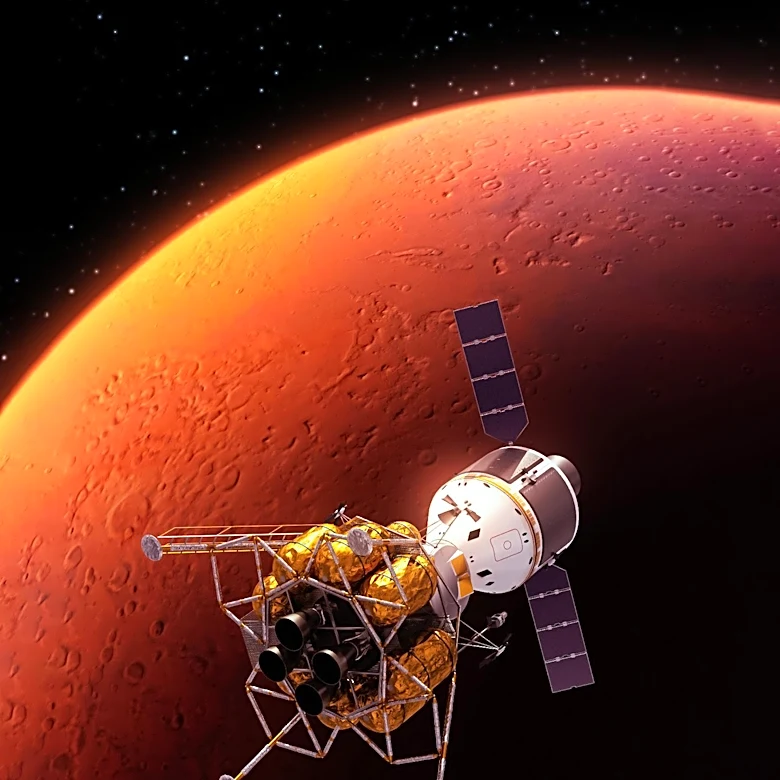
NASA's ESCAPADE mission, part of the Small Innovative Missions for Planetary Exploration program, has successfully captured images of Earth and the Moon using its Visible and Infrared Observation System cameras. These images were taken on July 3, 2026, when the spacecraft was 363,250 miles from Earth and 115,600 miles from the Moon. The images, captured in both visible and thermal infrared light, show Earth and the Moon as crescents with only about 8% of their surfaces sunlit. The thermal images reveal Earth's shadowed hemisphere glowing due to its own heat, while the Moon's far side remains much cooler. The mission, led by UC Berkeley's Space Sciences Laboratory, aims to study Martian auroras and the thermal properties of Mars' surface and atmosphere. The ESCAPADE spacecraft are currently in a 'loiter' orbit around Lagrange point 2 and are scheduled to use Earth's gravity in November 2026 to slingshot towards Mars, arriving in September 2027.