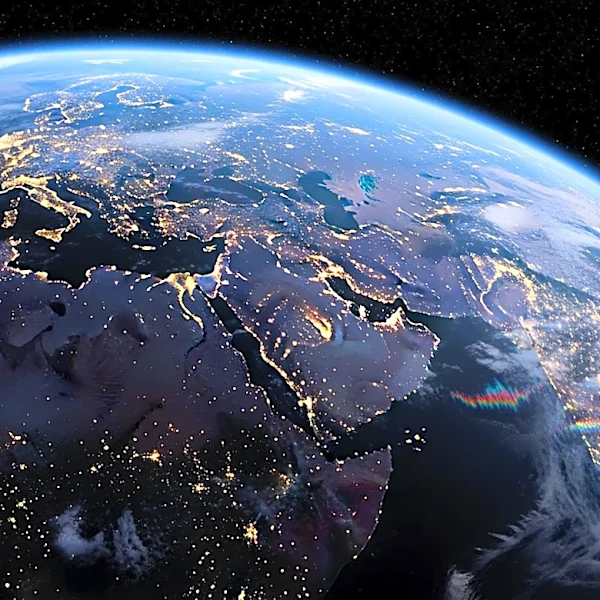
NASA Night-light Imagery Reveals U.S. Energy Transition and Global Volatility
NASA's new nighttime maps, based on satellite imagery, are providing insights into global energy transitions and volatility. The study, led by researchers at the University of Connecticut, analyzed 1.16 million satellite images collected over nine years. The findings highlight significant changes in artificial lighting, with intense flaring observed over major U.S. oil and gas fields, such as the Permian Basin and Bakken Formation. The imagery reveals cycles of industrial activity, including gas flaring, which releases carbon dioxide and soot. The data, accessible through NASA's Black Marble product suite, is being used to track energy movements and inform national security interests.