Scientists Investigate Neutrino Role in Stellar Collapse and Supernova Formation
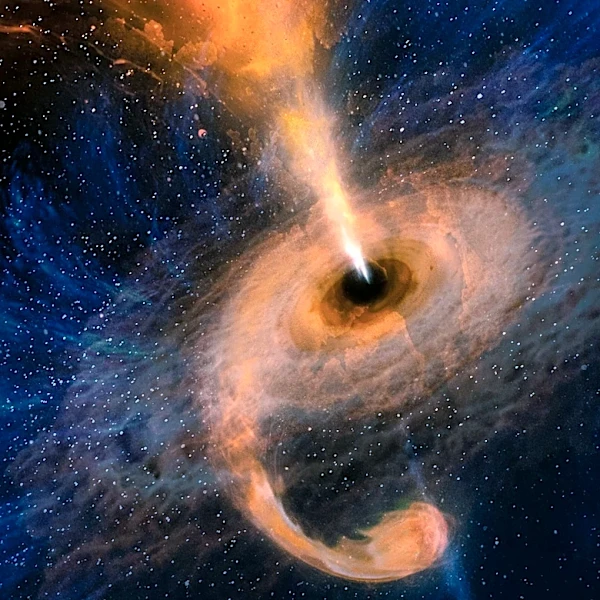
Scientists are investigating the role of neutrinos, often called 'ghost particles,' in determining whether massive stars explode as supernovas or collapse into black holes. When a massive star exhausts its fuel, its core implodes, generating immense heat and pressure that crush protons and electrons into neutrons, releasing a flood of neutrinos. These neutrinos can heat the star's outer layers, potentially triggering a supernova explosion and forming a neutron star. However, if this neutrino heating is insufficient, the star may instead collapse directly into a black hole. Researchers, including Mariam Gogilashvili and Irene Tamborra from the University of Copenhagen's Niels Bohr Institute, emphasize that neutrinos carry approximately 99% of the energy released during core collapse, and even minor changes in their behavior can significantly alter a star's ultimate fate. The study involved simulating the collapse of 195 stars, ranging from nine to 120 solar masses, to analyze how neutrino flavor conversion ...