Researchers Discover Potential First Exomoon Orbiting Brown Dwarf, Raising Questions About Moon Definitions
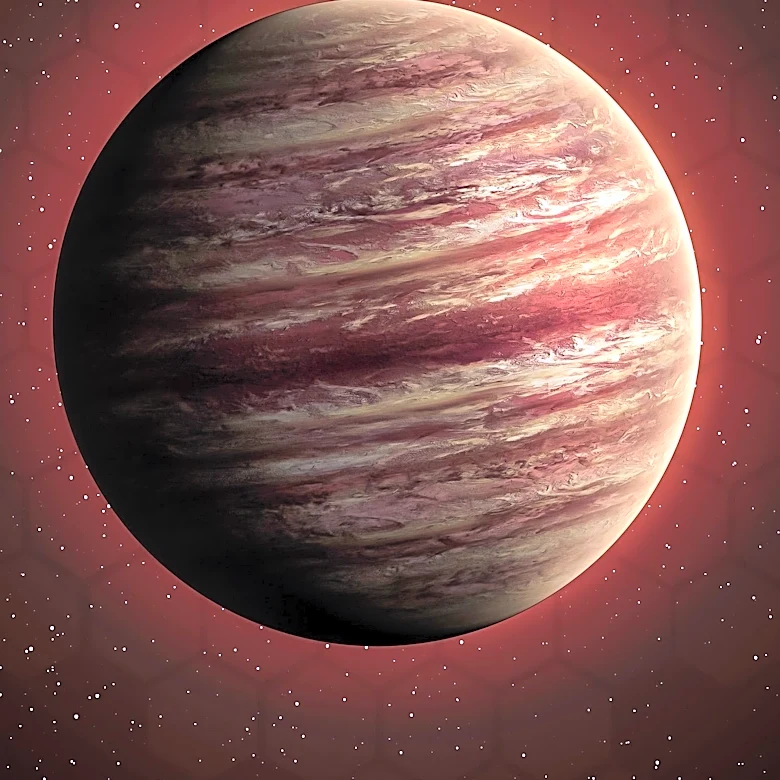
Researchers have potentially discovered the first exomoon, named CD-35 2722 B, orbiting a brown dwarf rather than a traditional planet. This discovery, led by Kevin Hoy, a PhD student at the Instituto de Estudios Astrofísicos, marks a significant milestone in the study of celestial bodies outside our solar system. The exomoon is approximately 90% the size of Jupiter and larger than Saturn, taking 170 days to orbit its host. The discovery was made using radial velocity analysis, a technique that detects wobbles in stars to indicate the presence of nearby exoplanets. This method, previously used to detect the first exoplanet, has now provided evidence of a satellite around a brown dwarf. However, the findings are controversial due to the lack of a standard definition for what constitutes a moon, as the International Astronomical Union has not yet defined such terms for exomoons.