Astronomers Discover First Pair of Sibling Supernovas from Binary Star System
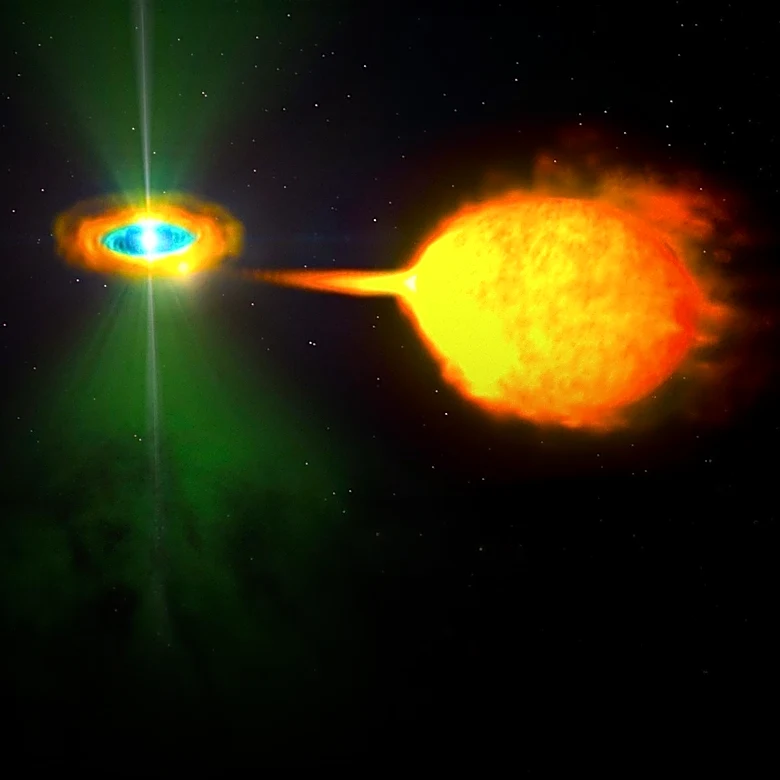
Astronomers have identified a unique astronomical phenomenon involving two supernova remnants, G189.6+3.3 and IC 443, which are believed to have originated from a binary star system. Using data from NASA's Fermi Gamma-ray Space Telescope, researchers detected high-energy gamma rays from G189.6+3.3, located near the well-known Jellyfish Nebula. The study, published in Nature Communications, suggests that these remnants are not coincidental neighbors but rather the result of two stars that exploded in separate supernovas after orbiting each other for millions of years. The research team, led by Miltiadis Michailidis from Stanford University, found that the northern half of G189.6+3.3 is dominated by accelerated protons due to its interaction with a dense hydrogen gas cloud, while the southern half is dominated by electrons. This discovery provides a real-world system to test theories about massive binary stars and their life cycles.