Discovery of 'Witch Croc' in New Mexico Sheds Light on Triassic Period Reptiles
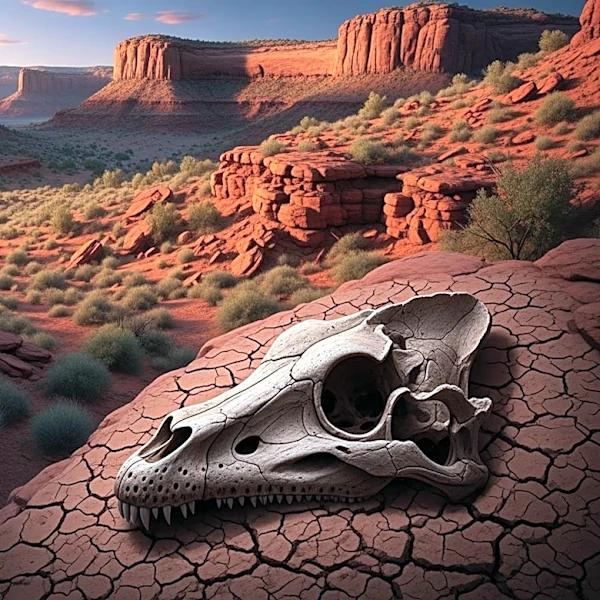
A team of paleontologists from the Natural History Museum of Los Angeles County has announced the discovery of a new species, Labrujasuchus expectatus, in New Mexico. This species, nicknamed the 'witch croc', is a bipedal, toothless crocodile relative from the Triassic Period. The remains were found at Ghost Ranch, a site known for its rich fossil history. Labrujasuchus resembles ornithomimosaurs, a group of bipedal dinosaurs, despite being a crocodile-line archosaur. This discovery fills a gap in the evolutionary history of shuvosaurs, a group of beaked, bipedal archosaurs that lived in the Southern US during the Late Triassic. The species name 'expectatus' reflects the anticipated discovery of such a link. The research, published in the Journal of Vertebrate Paleontology, highlights the convergent evolution of reptiles during the Triassic, where similar body plans were experimented with by both crocodile relatives and dinosaurs.