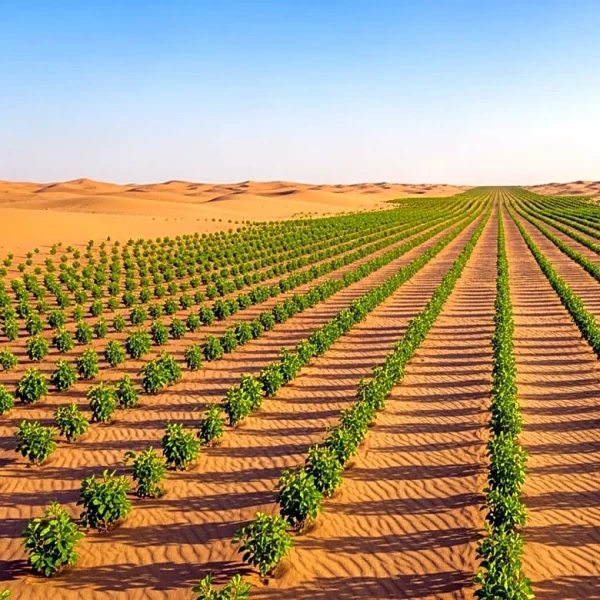
China's Afforestation Efforts Transform Taklamakan Desert into Carbon Sink
Recent research has highlighted a significant environmental transformation in the Taklamakan Desert, located in northwest China. Through a massive afforestation initiative, known as the Great Green Wall, China has planted over 66 billion trees around the desert's periphery. This effort has turned the once barren landscape into a thriving carbon sink, capable of absorbing more carbon dioxide than it emits. The study, published in the Proceedings of the National Academy of Sciences, reveals that human intervention can effectively enhance carbon sequestration in extreme arid landscapes. The initiative, which began in 1978 as part of China's Three-North Shelterbelt Program, aimed to combat desertification and improve agricultural productivity. Over the years, the program has successfully stabilized sand dunes and increased vegetation, significantly boosting the region's carbon absorption capacity.