







What is the story about?
Telangana-based Skyroot Aerospace is set to attempt the maiden launch of its Vikram-1 launch vehicle on July 18, a mission that could mark India's first attempt to launch a privately developed orbital-class rocket from Indian soil.
The launch is scheduled for 11:30 am from the first launch pad at the Satish Dhawan Space Centre-SHAR under a mission named Mission Aagaman.
According to the company, the mission has received the necessary airspace and maritime clearances. Vikram-1 will carry technology demonstration payloads from Grahaa Space, Cosmoserve, DCubed and Skyroot's SCOPE, along with Cosmos Diamonds' artwork Cosmic Bloom and a micro-art payload.
"We have done everything that could be done to test Vikram-1 on ground. On July 18, we are eager to see how Vikram-1 performs in a real flight environment for the first time," said Pawan Kumar Chandana, co-founder and chief executive officer of Skyroot Aerospace.
He said the mission is expected to generate flight data that will be used to support the company's future launch programme.
Vikram-1 designed for small satellite launches
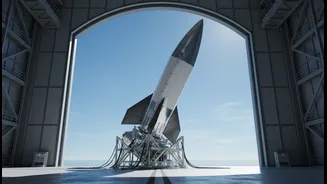
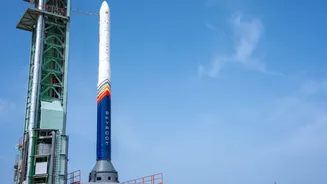
Vikram-1 is a multi-stage launch vehicle designed to place satellites weighing up to 350 kg into Low Earth Orbit. The rocket features an all-carbon composite structure and uses propulsion systems developed by Skyroot, including 3D-printed engines and solid-fuel boosters. The maiden mission is targeting a 450-km orbit at a 60-degree inclination.
The company said all stages of the launch vehicle have been integrated and stacked on the launch pad. It added that final checks of the vehicle, telemetry and tracking systems have been completed ahead of the launch.
Commenting on the market opportunity, Chandana said demand for satellite-enabled services is expected to grow while launch capacity remains constrained, creating opportunities in the small satellite launch segment.
Follows 2022 Vikram-S mission
Mission Aagaman follows Skyroot's Vikram-S mission in November 2022, which became the first privately developed rocket to reach space from Indian soil.
"This test flight will show us how the technologies we have developed over the years perform in real-world conditions," said Naga Bharath Daka, co-founder and chief operating officer of Skyroot Aerospace.
The Vikram-1 mission will serve as the first orbital launch attempt for the company and is expected to provide key performance data for future commercial missions.
Also read: Elon Musk says X's entire codebase will be made open source with 'no exceptions'
The launch is scheduled for 11:30 am from the first launch pad at the Satish Dhawan Space Centre-SHAR under a mission named Mission Aagaman.
According to the company, the mission has received the necessary airspace and maritime clearances. Vikram-1 will carry technology demonstration payloads from Grahaa Space, Cosmoserve, DCubed and Skyroot's SCOPE, along with Cosmos Diamonds' artwork Cosmic Bloom and a micro-art payload.
"We have done everything that could be done to test Vikram-1 on ground. On July 18, we are eager to see how Vikram-1 performs in a real flight environment for the first time," said Pawan Kumar Chandana, co-founder and chief executive officer of Skyroot Aerospace.
He said the mission is expected to generate flight data that will be used to support the company's future launch programme.
Vikram-1 designed for small satellite launches
Vikram-1 is a multi-stage launch vehicle designed to place satellites weighing up to 350 kg into Low Earth Orbit. The rocket features an all-carbon composite structure and uses propulsion systems developed by Skyroot, including 3D-printed engines and solid-fuel boosters. The maiden mission is targeting a 450-km orbit at a 60-degree inclination.
The company said all stages of the launch vehicle have been integrated and stacked on the launch pad. It added that final checks of the vehicle, telemetry and tracking systems have been completed ahead of the launch.
Commenting on the market opportunity, Chandana said demand for satellite-enabled services is expected to grow while launch capacity remains constrained, creating opportunities in the small satellite launch segment.
Follows 2022 Vikram-S mission
Mission Aagaman follows Skyroot's Vikram-S mission in November 2022, which became the first privately developed rocket to reach space from Indian soil.
"This test flight will show us how the technologies we have developed over the years perform in real-world conditions," said Naga Bharath Daka, co-founder and chief operating officer of Skyroot Aerospace.
The Vikram-1 mission will serve as the first orbital launch attempt for the company and is expected to provide key performance data for future commercial missions.
Also read: Elon Musk says X's entire codebase will be made open source with 'no exceptions'