




Here are today’s most important updates from the realm of Science and Space.
James Webb Telescope Unveils New Secrets of Exoplanet HATS-75 b
Astronomers from Johns Hopkins University (JHU) used the James Webb Space Telescope
(JWST) to observe a giant exoplanet known as HATS-75 b. This exoplanet is one of the recently discovered Giant Exoplanets orbiting M-dwarf Stars (GEMS). It was discovered in 2021 with the help of Automated Telescope Network-South (HATSouth) and NASA's Transiting Exoplanet Survey Satellite (TESS). This exoplanet is at a distance of some 637 light-years. Astronomers have already learned various aspects of the exoplanet, but recently, they observed it again to know more about its atmosphere. The recent analysis was done by a team of astronomers led by JHU's Reza Ashtari. They investigated the chemical composition of HATS-75 b's atmosphere.
Multiple Near-Misses in Space: ISRO Averts Potential Co
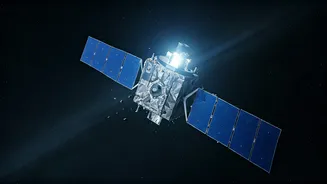
In a major demonstration of growing space traffic management capabilities, Indian Space Research Organisation has revealed that it carried out 18 collision avoidance manoeuvres (CAMs) across its satellite fleet, including critical interventions involving NISAR and Chandrayaan-2. The details were shared in Isro’s latest Space Situational Awareness (SSA) report. The agency analysed over 1,50,000 conjunction alerts issued by the Combined Space Operations Center under USSPACECOM for its Earth-orbiting satellites. Using more precise orbital data from operational flight dynamics, Isro identified credible threats and acted accordingly. Out of the total manoeuvres, 14 were carried out in Low Earth Orbit (LEO), including one involving NISAR, classified by Nasa as a “Risk Mitigation Manoeuvre.”
Solar Power Could Be the Future of Space Travel, Says Former SpaceX Engineer
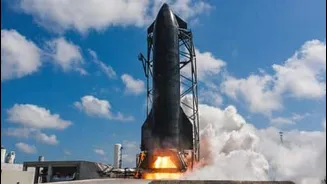
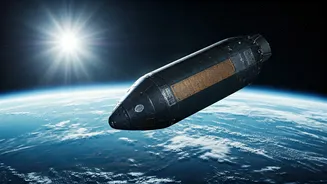
A former engineer behind SpaceX's powerful rocket engines is now leading a new effort to transform space travel using solar energy, according to reports. Jeff Thornburg, who helped develop the Raptor engine used in the company's Starship rocket, is now the chief executive of Portal Space Systems. The startup, founded in 2021, has raised 50 million dollars in a Series A funding round, valuing it at 250 million dollars. The investment was led by Geodesic Capital and Mach33, with participation from several major firms. Portal is working on a concept known as solar thermal propulsion. Unlike traditional engines that burn fuel or rely on solar-generated electricity, this system uses concentrated sunlight to heat propellant and push spacecraft at high speed. The idea was first explored by NASA decades ago but was never used in orbit due to limited demand at the time.
When Cure Turns Complication: Antibiotics May ‘Inflame’ Bacteria
Antibiotics are designed to kill harmful bacteria and help the body recover from infection. But some antibiotics may also push bacteria to release tiny particles that can make inflammation worse. While inflammation is part of the body's natural defense against infection, too much inflammation can damage healthy tissue and interfere with healing. In severe cases, excessive inflammation can become life-threatening. These particles are called bacterial extracellular vesicles, or BEVs. These microscopic, bubble-like structures carry proteins, toxins, and other molecular signals that influence how the immune system of the host responds. Although incredibly small, these structures can have powerful effects on the human body. When BEVs enter the bloodstream, they can interact with cells that line blood vessels and trigger an immune response.