


What is the story about?
Indian para powerlifter Jhandu Kumar entered the Commonwealth Games record books after securing a podium finish early on Saturday. At the Armadillo Arena in Glasgow, Kumar became a shining example of turning adversity into triumph.
The 28-year-old para powerlifter lifted 190kg to secure a bronze finish, sealing India's first medal at the 2026 CWG. He was well on track for a gold medal finish, but had to settle for a third-place finish due to a minor foul in his final attempt.
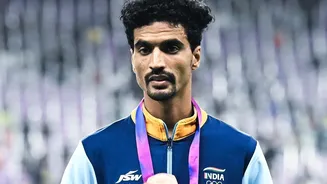
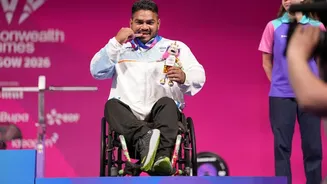
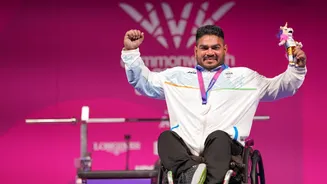
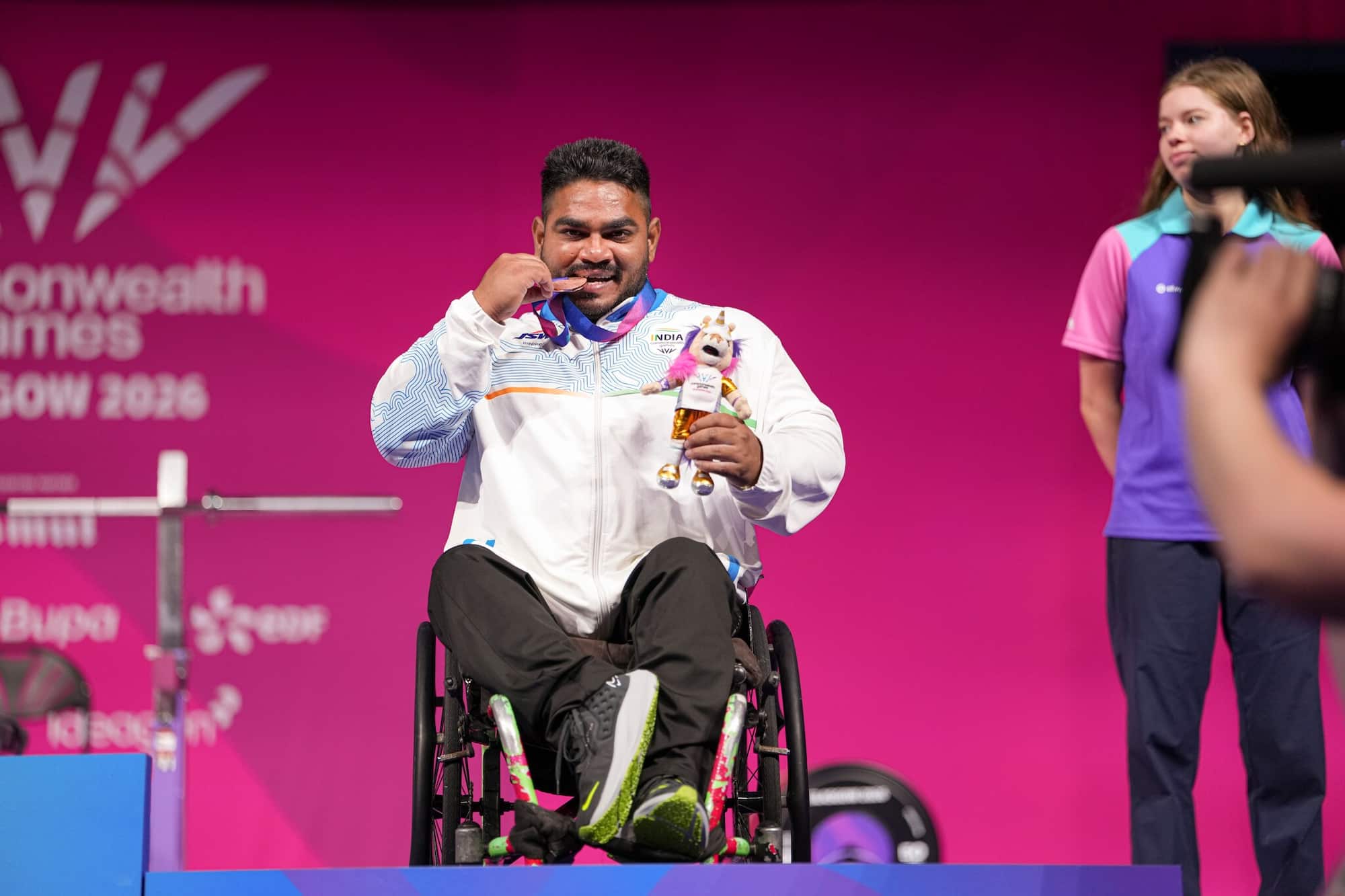
With the bronze medal around his neck, Kumar looked euphoric, with a radiant smile on his face. His journey is a remarkable tale of resilience.
Born in 1997 at Harnaut village in Bihar's Nalanda district, Kumar contracted polio at the age of five, leaving him with a disability which affected his legs. He came from a humble family of vegetable vendors and spent his childhood helping his parents sell vegetables on the streets to make ends meet.
Poverty forced him into menial jobs, where he ran a small vegetable business and drove an e-rickshaw to support his family during the COVID-19 pandemic.
Also Read | Jhandu Kumar kicks off India's CWG tally, secures bronze in men's heavyweight para powerlifting
The Indian powerlifter also revealed to Sportstar that he used to leave home before dawn in a private shared van to travel 20 kilometres to the wholesale vegetable market in Bihar Sharif. The last kilometre to the market did not have a motorable road, and Kumar had to use a hand-operated tricycle to cover the final stretch.
Kumar's end-of-day routine would always follow a similar pattern: close up shop at 04:00 PM, then work out. It was his first brush with athletics when he began weight training in 2010 and 2012 to develop his upper-body strength.
The 28-year-old began competing in para athletics in the F55 shot put and discus throw events and winning medals at the district and state levels. The life-changing moment came when coaches noticed his natural strength and encouraged him to try para powerlifting.
Also Read | Glasgow Commonwealth Games make history after debuting first-ever braille-designed medals
Under coach Rajinder Singh Rahelu's mentorship, Kumar began training at SAI's National Centre of Excellence in Gandhinagar, where he gained structured support and professional guidance. He quickly established himself as one of the country's leading powerlifters.
Kumar set a national record in the 2025 National Championships and improved his record at the Khelo India Para Games 2025 with a successful 206kg lift. He went on to win bronze at the 2025 Beijing World Cup and the Asia & Oceania Championships in 2026.
Kumar's story is not just about success; From selling vegetables on the street to reaching the podium at the 2026 Commonwealth Games, his journey embodies hope & perseverance and also highlights the transformative power of sport.
The 28-year-old para powerlifter lifted 190kg to secure a bronze finish, sealing India's first medal at the 2026 CWG. He was well on track for a gold medal finish, but had to settle for a third-place finish due to a minor foul in his final attempt.
With the bronze medal around his neck, Kumar looked euphoric, with a radiant smile on his face. His journey is a remarkable tale of resilience.
Who is Jhandu Kumar?
Born in 1997 at Harnaut village in Bihar's Nalanda district, Kumar contracted polio at the age of five, leaving him with a disability which affected his legs. He came from a humble family of vegetable vendors and spent his childhood helping his parents sell vegetables on the streets to make ends meet.
First medal in the bag!🥉
Jhandu Kumar powers #TeamIndia to its first medal at Glasgow 2026 with successful lift of 181kg and 190kg in the men’s heavyweight category of para powerlifting.
Watch the Commonwealth Games Glasgow 2026, today from 12:30 PM onwards, LIVE & EXCLUSIVE… pic.twitter.com/g070WNPoAJ
— Sony Sports Network (@SonySportsNetwk) July 24, 2026
Poverty forced him into menial jobs, where he ran a small vegetable business and drove an e-rickshaw to support his family during the COVID-19 pandemic.
Also Read | Jhandu Kumar kicks off India's CWG tally, secures bronze in men's heavyweight para powerlifting
The Indian powerlifter also revealed to Sportstar that he used to leave home before dawn in a private shared van to travel 20 kilometres to the wholesale vegetable market in Bihar Sharif. The last kilometre to the market did not have a motorable road, and Kumar had to use a hand-operated tricycle to cover the final stretch.
How was Kumar introduced to Para Powerlifting?
Kumar's end-of-day routine would always follow a similar pattern: close up shop at 04:00 PM, then work out. It was his first brush with athletics when he began weight training in 2010 and 2012 to develop his upper-body strength.
The 28-year-old began competing in para athletics in the F55 shot put and discus throw events and winning medals at the district and state levels. The life-changing moment came when coaches noticed his natural strength and encouraged him to try para powerlifting.
Also Read | Glasgow Commonwealth Games make history after debuting first-ever braille-designed medals
Under coach Rajinder Singh Rahelu's mentorship, Kumar began training at SAI's National Centre of Excellence in Gandhinagar, where he gained structured support and professional guidance. He quickly established himself as one of the country's leading powerlifters.
Glasgow: India's Jhandu Kumar celebrates after winning the bronze medal during the medal ceremony for the men's heavyweight para powerlifting event at the Commonwealth Games 2026, in Glasgow, Friday, July 24, 2026. (PTI Photo/Ravi Choudhary)
Kumar set a national record in the 2025 National Championships and improved his record at the Khelo India Para Games 2025 with a successful 206kg lift. He went on to win bronze at the 2025 Beijing World Cup and the Asia & Oceania Championships in 2026.
Kumar's story is not just about success; From selling vegetables on the street to reaching the podium at the 2026 Commonwealth Games, his journey embodies hope & perseverance and also highlights the transformative power of sport.