

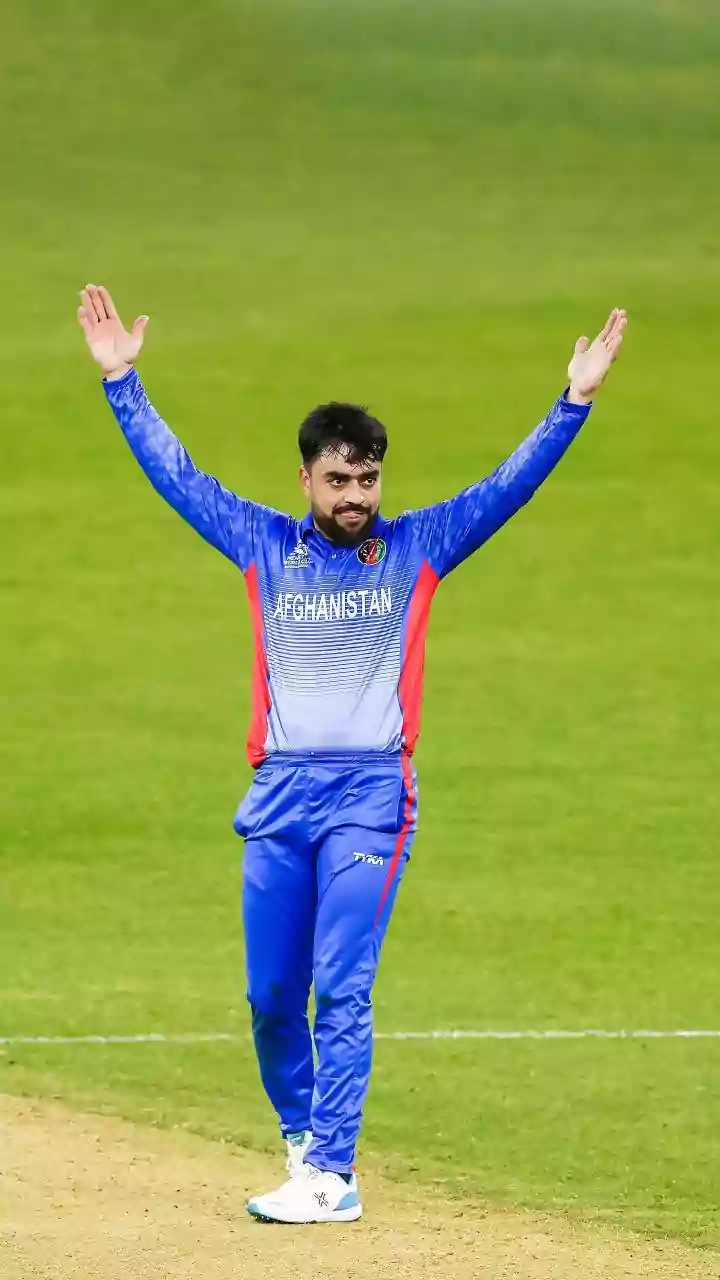






India’s endurance coach, Maxat Ayazbayev, has made it clear that the Indian team came into the race with realistic expectations. Competing against experienced international teams in this UCI 2.2 event, the focus for Indian riders is understanding what elite racing truly demands.
“We only started working together around three months ago,” Ayazbayev told Firstpost ahead of Stage 2 on Wednesday. “We prepared with training camps in Patiala, so it’s been a short time. We are trying to build step by step.”
Ayazbayev on importance of Pune Grand Tour
The Pune Grand Tour is the first race of this level for most Indian riders, and the gap between domestic racing and UCI competition has been clearly visible in the first two stages. According to the coach, international races are not only about physical strength. “There is a big difference between domestic races and UCI races. Positioning, tactics and fighting in the peloton are very important,” he explained.
That challenge becomes even harder in a race like this, where more than 160 riders are competing on narrow Indian roads. Ayazbayev described it as dangerous and stressful, especially for riders without enough international race days. “Everyone wants to be at the front. Without race experience, it becomes very difficult,” he said.
While foreign teams come into such events with years of exposure, Indian riders are still at the starting point. Ayazbayev pointed out that European teams race nearly 60 days a year, while many Indian cyclists are riding their first international stage race.
“This is a big first experience for us. At this moment, we are not expecting big results. The goal is to learn and gain experience. In the future, we hope this will help change the level of Indian cycling,” he said.
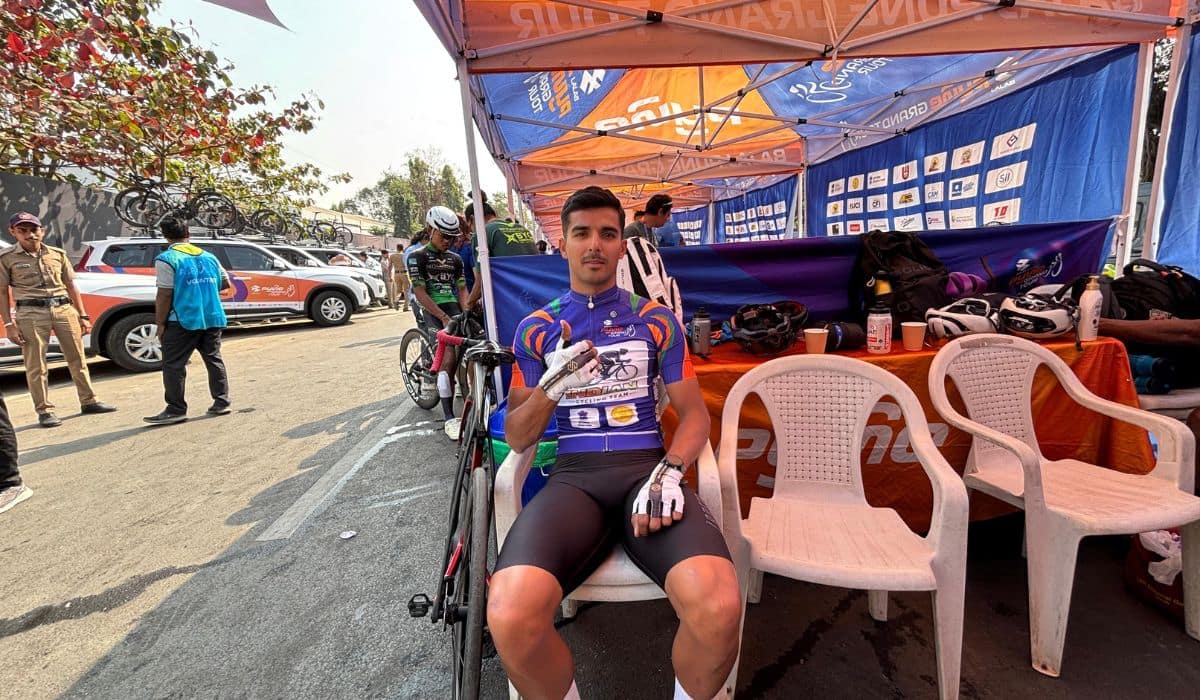
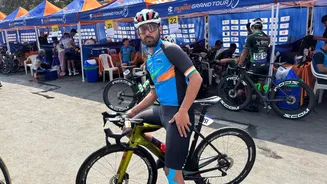
Indian national team rider Harshveer Sekhon is a triple silver medallist at the Asia Cup. Image: Vishal Tiwari/Firstpost
Sekhon reiterates his coach's comments
Indian rider and Asian Championship medallist Harshveer Sekhon echoed those thoughts, calling the Pune Grand Tour a major platform for Indian cycling. For him, the biggest learning has been understanding how different multi-day racing is compared to one-day domestic events.
“A UCI race is completely different. It’s not just about how strong you are on one day. You have to perform day after day, so nutrition, recovery and sleep become very important,” Sekhon told Firstpost. “This is a really good initiative by the Cycling Federation of India and the Maharashtra government. If we have more consistent competitions like this, it will definitely help us move closer to Olympic qualification.”
Despite the challenges, racing at home has been a source of motivation for Indian riders. Sekhon said the support from local fans in Pune has been encouraging. “I wouldn’t call it pressure. It’s more of a motivation. People know me and support me, and that gives me a big boost,” he said.
International riders, too, have noticed the enthusiasm around the race. Belgian, Australian and European cyclists praised the organisation, crowd support and growing potential of India as a cycling destination. Many felt that events like the Pune Grand Tour could soon become regular stops on the international calendar.
“It’s incredible. There are so many people along the entire course, and it’s beautiful to see. Everything has been perfect. The organisation has been really good, and there’s nothing to complain about,” Belgian rider Jelle Harteel from Tarteletto–Isorex told Firstpost.
“Yeah, it’s really nice. The race is very well organised, there are lots of people around and plenty of support. So far, it’s been really good,” Australian Dylan Hopkins of the Roojai Insurance team said.
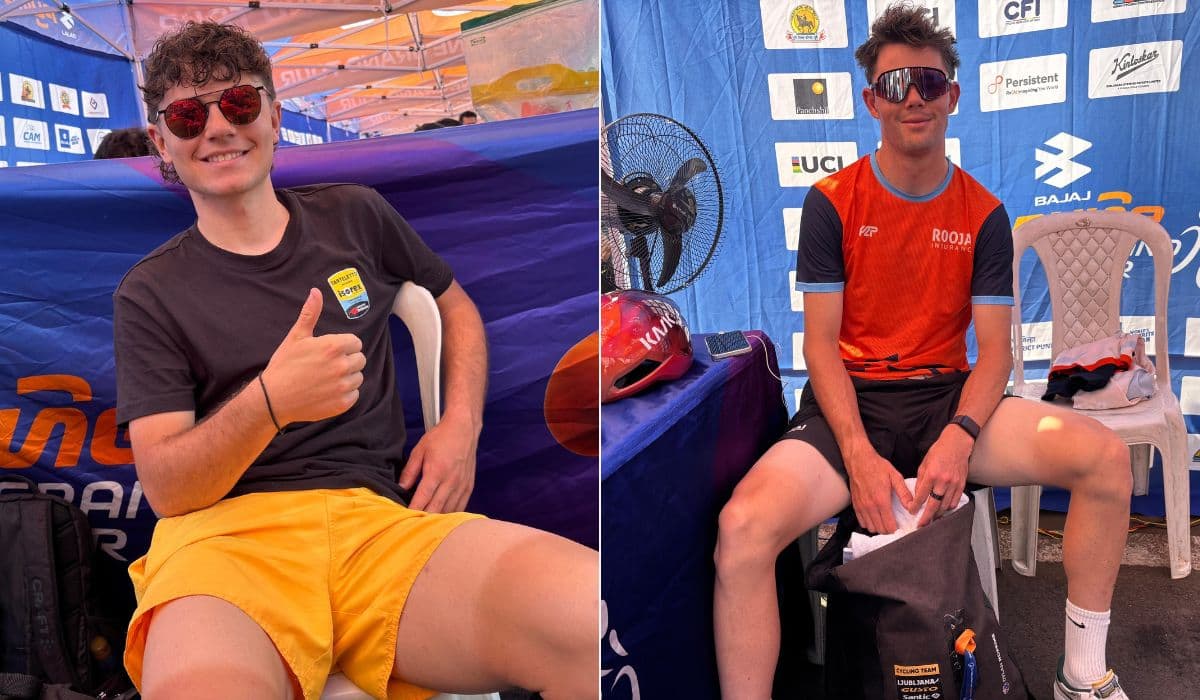
Foreign riders Dylan Hopkins and Jelle Harteel in their respective team tents before the Stage 2 race. Image: Vishal Tiwari/Firstpost
However, Ayazbayev believes that for Indian cycling to really grow, more needs to be done beyond hosting just one race. “Training alone is not enough without racing. In a season, riders need at least 10 big races like this. With more races, experience will come, and then results at the Asian and world level will follow,” he said.
He also stressed the need for strong Indian continental teams instead of relying only on the national setup. According to him, regular international competition is the only way to close the gap with European riders.
"To improve, India needs strong club teams like continental or pro-continental teams. Racing only as a national team is not enough. Riders need regular international races against European teams," he concluded.
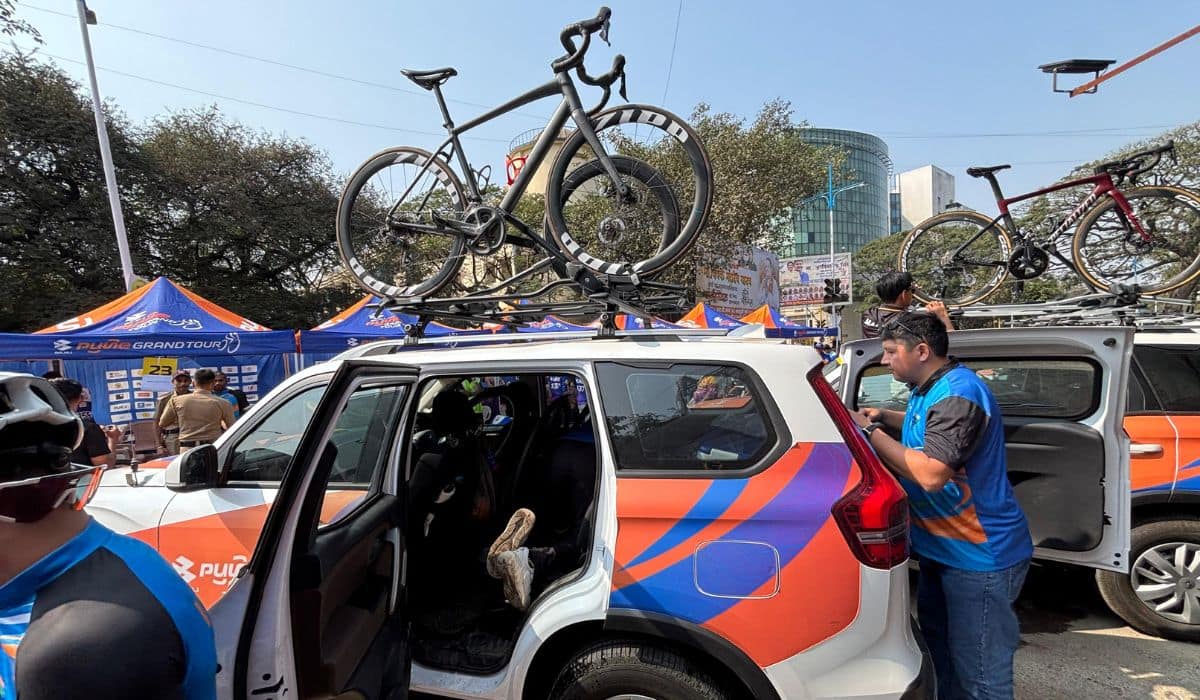
Maxat Ayazbayev gets his team ready at the starting point for Stage 2. Image: Vishal Tiwari/Firstpost
The 2026 Pune Grand Tour will enter Stage 3 (Western Ghats Gateway) on Thursday, where riders will cover 134 kilometres from Purandar to Baramati and climb a total elevation of 1,024 metres. It is the longest race of the event and is expected to be the most tactical day. It presents another learning opportunity for Indian riders and a chance to shape the future of the sport in the country.