



Return to Lunar Orbit
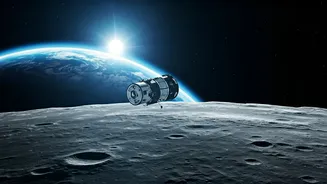
After a nearly 50-year hiatus since the Apollo 17 mission in December 1972, humans are once again set to journey to the vicinity of the Moon. The Artemis
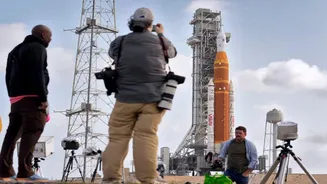
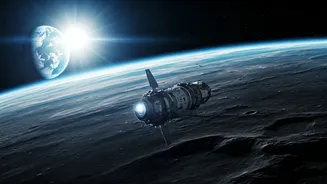
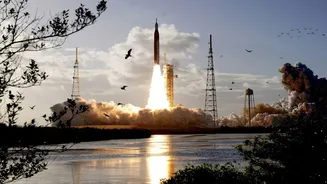
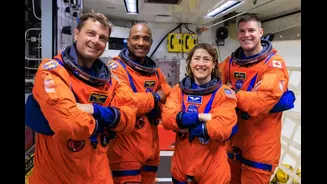
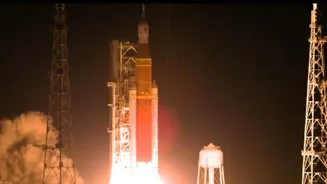
II mission is poised to send a crew of four astronauts on an orbital trajectory around our celestial neighbor. This endeavor is not about landing; rather, it functions as a vital precursor, an extensive test run for a more ambitious future mission that aims to put boots back on the lunar surface. The scale of this undertaking is immediately apparent, with the Orion spacecraft serving as the astronauts' home for a 10-day voyage, significantly surpassing the size and capabilities of the Apollo command modules. Modern advancements in computing and software mean that Orion boasts computational power far exceeding that of the Apollo Guidance Computers, which relied heavily on continuous support from Earth. The sophisticated deep space avionics system in Orion is designed for autonomous operation, capable of managing emergencies without constant pilot input, a capability rigorously validated during the uncrewed Artemis I mission in 2022. Complementing this advanced spacecraft is the Space Launch System (SLS) rocket, the most powerful launch vehicle ever developed, dwarfing the Saturn rockets of the Apollo era.
Paving for Future Missions
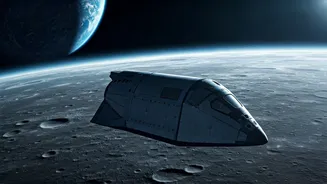
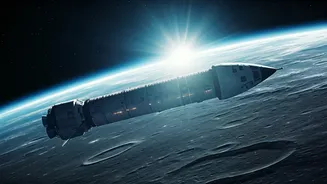
Successful execution of the Artemis II mission will serve as the critical foundation for subsequent lunar landing endeavors. The Orion spacecraft itself is incapable of landing on the Moon; therefore, it will require a rendezvous and docking with a dedicated lunar lander, such as the anticipated Starship Lander. This current mission is strategically designed to gather essential data and build confidence in several key areas. It will meticulously assess Orion's navigation and control systems in the challenging lunar vicinity, evaluate the effectiveness of its advanced radiation shielding as the crew traverses regions known for high levels of harmful cosmic rays, and test the resilience and efficacy of its life support systems in maintaining a habitable environment within the spacecraft for the entire 10-day duration. The subsequent Artemis III mission, tentatively scheduled for mid-2027, will focus on practicing the complex docking maneuver with the Starship Lander. This critical procedure will be rehearsed in low Earth orbit, mirroring the Gemini 8 mission's 1966 docking exercise between Neil Armstrong and David Scott, which was a preparatory step for the Apollo 11 lunar landing three years later. A successful Artemis III mission would then clear the path for Artemis IV, aiming to achieve a human lunar landing, marking a historic return after decades of absence.
The High Cost of Ambition
The question of why return to the Moon, especially after multiple successful Apollo missions and considering the immense financial investment, is a significant one. The launch of Artemis II alone carries an estimated cost of approximately $4 billion. When viewed within the broader context of the entire Artemis program, the cumulative expenditure has already surpassed a staggering $90 billion. This ambitious undertaking is not solely an American endeavor; it represents a significant international collaboration. Space agencies from Canada, Europe, and Japan are actively contributing to technology development and providing crew participation, fostering a spirit of global partnership. As a testament to this international cooperation, the Artemis II mission includes Canadian astronaut Jeremy Hansen as a key member of the crew.
Lunar Science Opportunities
Beyond the geopolitical implications of potentially claiming prime lunar mining sites, particularly at the South Pole, the Moon offers unparalleled opportunities for scientific advancement. Astronomers, for instance, stand to gain immensely from lunar-based research. The Moon's lack of atmosphere makes it an ideal platform for telescopes, allowing for significantly greater sensitivity and clearer observations compared to their terrestrial counterparts. Furthermore, the Moon possesses unique radio-quiet zones, shielded from Earth's pervasive radio interference. These pristine environments are perfect for deep radio astronomy, enabling scientists to probe the earliest moments of the Universe and potentially answer fundamental questions about its history. As articulated by Joseph Silk in his book 'Return to the Moon: The Next Giant Leap for Humankind,' scientific exploration from the Moon has the potential to unlock entirely new avenues of understanding for some of humanity's most profound cosmic inquiries.