





Countdown to Liftoff
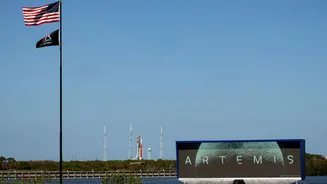
NASA's Artemis II mission is meticulously progressing towards its launch from Kennedy Space Center, marking a significant return to lunar exploration after
a 50-year hiatus. The final stages involve critical closeout procedures on the Orion spacecraft, including the secure sealing of the crew module's hatch. This ensures the spacecraft is fully pressurized and ready for the demanding journey. Teams are diligently monitoring weather conditions, with current projections indicating an 80% chance of favorable launch opportunities, although potential concerns regarding cloud cover, precipitation, and ground winds are continuously assessed. Extensive briefings are provided to the crew, covering launch site conditions, abort zones, and recovery areas to guarantee the utmost safety. These final preparations are a testament to the rigorous planning and execution required for such a monumental undertaking in deep space exploration, setting the stage for a historic flight.
Meet the Trailblazing Crew
The Artemis II mission boasts a historically significant four-person crew, each bringing unique expertise and representing groundbreaking firsts. Commander Reid Wiseman, a seasoned NASA astronaut and former U.S. Navy pilot, leads the mission, drawing on his extensive spaceflight experience. Pilot Victor Glover, another accomplished NASA astronaut and U.S. Navy captain, becomes the first person of color to venture beyond low Earth orbit. Mission Specialist Christina Koch, an electrical engineer and record-holding astronaut for the longest single spaceflight by a woman, will be the first woman to travel this far into space. Joining them is Canadian Space Agency astronaut Jeremy Hansen, a colonel in the Royal Canadian Air Force, who achieves the distinction of being the first non-American to embark on a lunar journey. This diverse assembly of talent underscores NASA's commitment to inclusive representation in its ambitious space exploration endeavors, pushing the boundaries of human presence in space.
Mission Objectives and Lunar Flyby
The Artemis II mission's primary goal is not a lunar landing, but rather a critical deep space systems test. The four astronauts will undertake a roughly 10-day journey, performing a low flyover of the Moon to thoroughly evaluate the Orion spacecraft's performance and capabilities in the harsh environment of deep space. This includes rigorous testing of life support, communication, navigation, and other vital onboard technologies essential for future missions that aim for lunar landings and beyond. By conducting these extensive system checks, the mission gathers invaluable data on how humans endure and operate during extended periods away from Earth. This flight is a crucial stepping stone, building upon the success of the uncremed Artemis I and laying essential groundwork for subsequent Artemis missions intended to re-establish a human presence on the Moon and eventually pave the way for Mars exploration.
Journey Through Deep Space
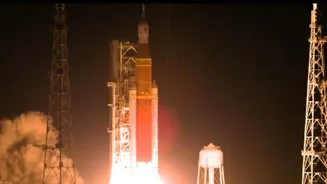
The Artemis II mission is structured as a 10-day expedition, commencing with launch and early orbit maneuvers, followed by proximity operations with the Orion spacecraft and essential system checks. Flight Day 2 involves testing exercise equipment and executing the vital translunar injection burn, propelling the Orion towards its lunar trajectory. Subsequent days are dedicated to rehearsing lunar flyby operations, conducting safety drills, and performing trajectory corrections en route. As the spacecraft enters lunar space on Flight Day 5, astronauts will test spacesuits for emergency scenarios. Flight Day 6 is the mission's highlight, with the Orion spacecraft flying within 4,000–6,000 miles of the Moon, enabling extensive imaging and scientific observations. Post-flyby, astronauts will transmit data, communicate with the International Space Station, and test radiation shielding and maneuverability during the return journey. The mission culminates on Flight Day 10 with Earth atmospheric reentry, parachute deployment, and splashdown in the Pacific Ocean.
Groundbreaking Preparations and Innovations
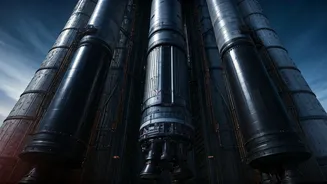
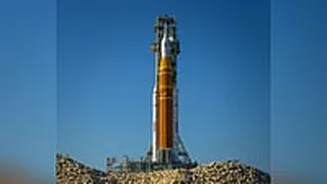
The Artemis II mission's readiness is underscored by numerous critical preparations, including the completion of NASA's Flight Readiness Review, granting approval for launch. This comprehensive review encompassed the Space Launch System (SLS) rocket, the Orion spacecraft, crew readiness, and all mission systems to ensure safety and performance. NASA teams are also actively engaged in loading the interim cryogenic propulsion stage with liquid oxygen (LOX) to prepare the SLS rocket's upper stage. The mission also highlights innovative safety features, such as the Orion Crew Survival System suits, designed for enhanced astronaut mobility and comfort. Furthermore, a unique zero-gravity indicator, a stuffed toy designed by an 8-year-old, serves as a visual cue for astronauts entering weightlessness, adding a touch of human ingenuity to the advanced technology of space exploration.