


No Showers in Space
Shubhanshu Shukla, a pioneering Indian astronaut and the second Indian to venture into space after Rakesh Sharma, has demystified the daily routines aboard
the International Space Station (ISS). A frequent question he encounters is about personal hygiene, and the answer is quite different from what we experience on Earth. There are, in fact, no showers on the ISS. Maintaining cleanliness in microgravity is a fascinating scientific endeavor that requires specialized approaches. Shukla shared insights, explaining that staying fresh involves a meticulously designed process that conserves precious resources, making personal hygiene a unique challenge and an elegant solution in the space environment.
The Hygiene Kit Method
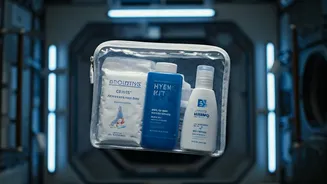
Astronauts on the ISS don't rely on traditional bathing methods; instead, they utilize a specialized hygiene kit for their personal cleanliness. This kit contains a compact pouch holding a washcloth pre-impregnated with a disinfecting shampoo. To activate it, a small amount of water is added, transforming the cloth into a fully saturated cleaning tool. Shukla humorously described this as 'the world's most expensive sponge bath' due to the advanced nature and resource management involved. This innovative approach ensures astronauts can maintain hygiene effectively without the luxury of running water available on Earth, showcasing the ingenuity required for life in space.
Water Reclamation System
Water is an incredibly valuable commodity in space, and its management is paramount on the ISS. After an astronaut completes their 'sponge bath,' the used washcloth is not simply discarded. Instead, it's placed in a designated area where its residual moisture is collected. This captured water is then fed back into the station's sophisticated water reclamation system. This closed-loop process is a testament to the resourcefulness of space travel, ensuring that not a single drop of water is wasted. The recycling of moisture from hygiene activities significantly contributes to the ISS's overall water supply, highlighting the critical importance of conservation in the extraterrestrial environment.
Daily Life Adaptations
Beyond bathing, everyday activities on the ISS require unique adaptations. For instance, when Shukla demonstrated his hygiene routine, viewers noticed his phone freely floating mid-air, a common occurrence in microgravity where objects don't fall. He pointed out that mobile holders are unnecessary in space. He also addressed other common curiosities, such as dental hygiene, explaining that astronauts use NASA-approved toothpaste which they swallow, as spitting is not feasible. Furthermore, the concept of 'morning' is dictated by Greenwich Mean Time (GMT), not natural sunrises, as the ISS experiences multiple sunrises and sunsets daily. These adjustments underscore the significant differences in daily life for astronauts compared to those on Earth.