






A Welcoming Heritage
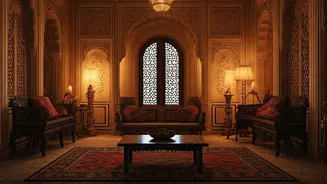
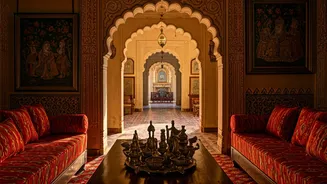
The entrance to Deputy Chief Minister Diya Kumari's Jaipur residence immediately immerses visitors in the spirit of Rajasthani hospitality. This is more
than just an official dwelling; it's a carefully curated space that echoes the region's rich cultural legacy. From the moment guests arrive, they are met with a traditional welcome that embodies the principle of 'Atithi Devo Bhava,' treating guests as divine. This ethos permeates the entire home, influencing not only the decor but also the overall atmosphere, creating an environment where cultural pride is evident in every detail. According to psychologist Neha Cadabam, such an environment significantly impacts self-perception and belonging, reinforcing identity through tangible connections to history and tradition. The residence acts as a living archive, where the art, crafts, and customs of Rajasthan are not merely decorative but integral to the home's narrative and the inhabitants' sense of self.
Walls of History
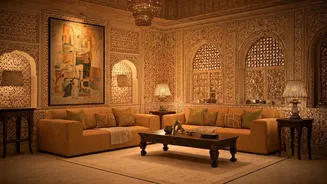
Within Diya Kumari's residence, the walls themselves seem to narrate Rajasthan's glorious past, most notably through a prominent painting of Amber Fort. This artwork, and others like it, transcends mere decoration; it serves as a powerful visual link to the state's historical and architectural grandeur. Kumari emphasizes how these forts, such as Chittorgarh and Jaisalmer, along with Kumbhalgarh Fort, which boasts the second-longest wall globally, are integral to Rajasthan's identity. From a psychological perspective, these cultural symbols foster a profound sense of pride and connection to a larger collective narrative, reinforcing self-identity and emotional stability. They create a vital sense of continuity, linking the past, present, and future, offering a reassuring foundation that combats feelings of isolation and underscores the enduring nature of heritage and tradition for individuals within their environments.
Personal Craftsmanship Flourishes
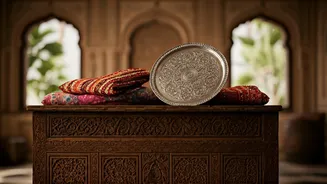
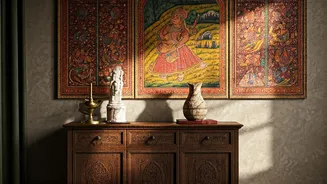
Despite its status as a government-allocated space, Diya Kumari's Jaipur residence is imbued with a distinctly personal touch, showcasing her commitment to promoting local handicrafts. Elements like cushions adorned with traditional Sanganeri prints, delicate displays of blue pottery, and finely framed miniature paintings, a craft for which Rajasthan is internationally renowned, are meticulously integrated. Kumari's deliberate choice to incorporate these local artisanal creations transforms the residence into a celebration of Rajasthan's artistic talent. A particularly striking piece is a blue pottery depiction of Srinathji, which masterfully merges devotional art with the region's celebrated ceramic traditions, illustrating a thoughtful layering of cultural and personal expression within the official capacity of the home.
Spiritual Connections Beyond
While Rajasthan's heritage is a dominant theme, the residence also holds art that speaks to broader spiritual and historical connections. A painting of the Varanasi ghats hangs in a contemplative corner, reflecting a personal and familial link to the ancient city. This connection stems from historical ties, notably Raja Man Singh's contributions to the area and his support for the Kashi Vishwanath Temple. Kumari finds this artwork deeply serene, using the space as a peaceful spot for morning reflection and work. This artwork transforms a simple corner into a vital sanctuary, providing a moment of respite and spiritual grounding amidst the demands of public life, illustrating how art can serve as a profound personal anchor.
The Office as Sanctuary
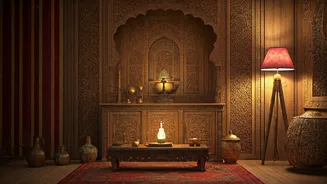
Interestingly, Diya Kumari identifies her office as her favourite space within the residence, a surprisingly practical choice that highlights its significance as both a workspace and a sanctuary. For a public figure managing diverse responsibilities, this room offers a unique blend of peace and productivity. Psychologist Neha Cadabam explains that such dedicated personal corners are psychologically crucial, providing safety and a sense of control. These spaces allow for a mental reset, supporting focus, creativity, and emotional regulation by offering a predictable and calming environment. This dedicated area enables individuals to recharge, maintain emotional balance, and effectively participate in other social aspects of their lives, demonstrating the importance of personal sanctuaries.
Treasures from Travels
Another sunlit area of the house features a collection of art acquired during Diya Kumari's travels, both domestically and internationally. Her practice of bringing back art from new destinations extends beyond personal souvenirs; it represents a larger commitment to supporting global artisans. By acquiring and displaying these pieces, she provides much-needed reach and recognition to artists creating beautiful work. This approach effectively turns her residence into an eclectic gallery, celebrating diverse craft traditions and highlighting the value of cultural exchange through art, showcasing a thoughtful integration of personal experiences with a broader appreciation for craftsmanship.
Courtyard Light and Air
The architectural design of the residence incorporates a traditional open courtyard, a feature that bathes adjacent rooms in abundant natural light. Kumari expresses her fondness for this element, noting its contribution to a bright and airy ambiance, reminiscent of classic Indian homes designed for climate and daily life. Psychologically, such spaces serve as crucial 'mental reset zones,' offering respite from social roles and external pressures. According to experts, these moments of solitude are essential for emotional regulation and mental clarity, helping to mitigate cognitive overload from constant interaction. This thoughtful integration of natural light and open spaces underscores the home's function as a restorative environment, promoting well-being through its connection to natural elements.
Heirlooms of Legacy
Beyond the visual arts and decor, Diya Kumari's personal wardrobe holds significant historical and emotional weight, particularly her collection of sarees. Many of these garments are cherished heirlooms, passed down from her grandmother and mother, and also received as gifts. Her fondness for sarees extends to acquiring pieces from her travels, viewing each one as a tangible connection to a place or memory. This practice of preserving and wearing these textiles underscores a deep respect for generational continuity and personal history, transforming clothing into a medium for carrying forward family legacy and cherished memories, reinforcing a sense of enduring connection across time.