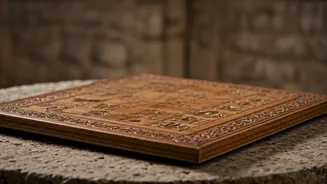








Introduction to Ancient Games
The love for board games stretches back millennia, providing entertainment, strategic thinking, and cultural insights. These games provide a window into
the past, revealing the values, beliefs, and leisure activities of ancient civilizations. They weren't just for amusement; these games often reflected societal structures, military strategies, and even religious beliefs. By examining these games, we can gain a richer understanding of the people who played them and the worlds they inhabited. The games’ rules, board designs, and pieces reflect the technological and artistic advancements of their time, offering clues about daily life and cultural practices.
Chaturanga: India's Strategic Gem
Originating in India, Chaturanga, which emerged around the 6th century, is often considered the ancestor of modern chess. The game, involving a board and a set of diverse pieces (including elephants, chariots, and infantry), reflected the military formations of the time. The goal was to checkmate the opponent's king. Chaturanga spread westward, evolving into chess as it moved through Persia and Europe. Its strategic depth and the complex movements of its pieces challenged players to develop tactics and anticipate their opponents' moves. This game’s evolution demonstrates the enduring appeal of strategic thinking and its impact on warfare and culture.
The Royal Game of Ur
Dating back to ancient Mesopotamia (around 2600–2400 BC), The Royal Game of Ur is one of the earliest known board games. Discovered in the Royal Tombs of Ur in modern-day Iraq, this game involved a race between players around a marked track. Using dice to determine moves, players navigated their pieces across the board, aiming to reach the end before their opponents. The game's rules and board layout hint at religious significance, potentially symbolizing the journey through the afterlife or reflecting social hierarchies. The discovery of multiple sets and boards across the region confirms its popularity and social role.
Senet: Egypt's Game of Afterlife
Senet, a game originating in ancient Egypt, offers insight into the beliefs surrounding the afterlife. The game board, marked with squares, represents the journey through the underworld. Players moved pieces, hoping to avoid obstacles and reach the final square, symbolizing a successful passage. Senet boards have been found in numerous tombs, indicating their presence in burial rituals, with the game believed to provide spiritual support during the afterlife journey. The gameplay, using dice to determine moves, emphasized chance and strategy, requiring players to plan ahead while adapting to unpredictable outcomes. The evolution of Senet and its religious symbolism make it one of the most culturally significant games.
Mancala: Seeds of Strategy
Mancala is a family of games involving the movement of seeds or stones across a board. While many versions emerged across the world, their core mechanics are similar: players capture seeds by strategically distributing them into pits. The simplicity and portability of Mancala made it incredibly popular, with evidence of its existence in ancient Egypt, the Middle East, and various parts of Africa. The games were not just about strategic manipulation; they also reflected the agrarian societies where they originated, with the seeds symbolizing harvest and abundance. Mancala's variations show how culture shapes gameplay, with each region developing unique boards and rules.
Backgammon: A Roman Legacy
Backgammon, with its roots in ancient Rome, has survived the test of time and remains popular today. Combining strategy and chance, the game involves moving pieces around a board according to dice rolls. The rules of backgammon evolved over centuries, with the Romans adapting earlier versions of games played in the Middle East. Archaeological findings confirm backgammon's popularity in various Roman settlements, indicating its role in social interaction and leisure. The game involves tactical decisions, dice-based luck, and a race to bear off pieces. Backgammon’s evolution through different cultures is a testament to its enduring appeal and adaptability.