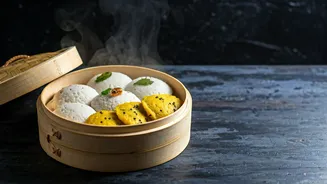

Introduction: Steaming Healthy
Steaming is a healthful method of cooking that preserves nutrients and creates lighter, easily digestible meals. Indian cuisine has a rich history of utilizing
this technique, especially for breakfast. This article showcases ten diverse steamed breakfast dishes, highlighting their unique flavors and regional origins. These dishes are perfect for those seeking nutritious and delicious morning meals, offering a healthier start to the day. From the southern states' favorites to the north's specialties, each dish introduces a unique blend of spices, grains, and vegetables.
Idli: South Indian Staple
Idli, a steamed savory cake, is arguably the most well-known breakfast from South India. Made from fermented batter of rice and urad dal (black lentils), this dish is fluffy, light, and easily digestible. The fermentation process enhances its nutritional value, aiding in easy absorption. Idlis are typically served with sambar (a lentil-based vegetable stew) and coconut chutney. Their plain taste makes them versatile, pairing well with various chutneys and gravies, making them a go-to breakfast choice across South India. Preparing idli at home requires soaking rice and lentils, grinding them into a smooth batter, allowing it to ferment, and finally, steaming the batter in specially designed idli molds.
Idiyappam: String Hoppers
Also known as string hoppers, Idiyappam is a delicate and versatile breakfast food made by pressing rice flour dough into noodle-like strands, then steaming them. Originating in South India and Sri Lanka, it's often served with coconut milk, vegetable stews, or egg curries. The rice flour used in Idiyappam makes it gluten-free and easily digestible. This dish's neutral taste makes it a great canvas for various flavors. Making idiyappam requires a special press to create the thin noodle strands that are then steamed. This steaming process creates a light and fluffy texture that melts in the mouth, perfect for absorbing the flavors of accompanying dishes.
Puttu: Kerala's Delight
Puttu is a popular breakfast dish from Kerala, primarily made of steamed cylinders of ground rice flour layered with grated coconut. It's often served with kadala curry (black chickpea curry) or sweetened with palm sugar and bananas. The coarsely ground rice provides a slightly grainy texture, complemented by the sweetness of coconut. Puttu is cooked in special cylindrical molds or puttu steamers, creating its signature shape. The combination of rice flour and coconut adds fiber and natural oils, offering a filling yet light breakfast option. It is a symbol of Kerala’s culinary heritage, easily recognized by its distinctive shape and aroma.
Modak: Sweet Celebration
Modak is a sweet dumpling, commonly prepared in Maharashtra and other parts of India, especially during the festival of Ganesh Chaturthi. While not always a daily breakfast, it’s a popular steamed treat. The outer shell is made of rice flour or wheat flour, and the filling typically consists of grated coconut and jaggery. Steaming ensures the modak remains soft and flavorful. It symbolizes prosperity and is offered to Lord Ganesha. Making modaks at home often involves shaping the dough into a cone or dumpling, filling it, and then steaming it. The different fillings can vary regionally but generally include the sweetness of coconut and jaggery.
Dhokla: Gujarati Breakfast
Dhokla is a steamed snack from Gujarat, made from a fermented batter of gram flour (besan). It has a fluffy texture and a slightly tangy taste, often tempered with mustard seeds, green chilies, and coriander. Dhokla is a versatile dish, enjoyed as a snack or breakfast and can be prepared in various ways. The fermentation process makes dhokla light and easy to digest, while the gram flour provides protein. The tempering adds a burst of flavors and aroma. Typically, it’s served with green chutney and tamarind chutney. Making dhokla involves fermenting the batter, steaming it until fluffy, and then tempering it for enhanced flavors and textures.
Kadubu: Karnataka's Treat
Kadubu is a traditional steamed dumpling from Karnataka, primarily prepared during festivals and special occasions, but it can also be a unique breakfast choice. Made with rice flour and a variety of fillings, such as coconut, jaggery, and lentils, it offers a blend of flavors. The steaming process gives kadubu a soft and moist texture. The fillings contribute to both the taste and nutritional value. The making process usually involves preparing a dough and shaping it with the filling, followed by steaming. The addition of coconut, jaggery, or lentils inside makes the Kadubu a complete meal that provides energy and essential nutrients.
Dal Pitha: Assamese Delight
Dal Pitha is a steamed dumpling from Assam, similar to other dumpling-style foods in India. It is made from rice flour dough with a filling of lentils and spices. Dal Pitha is a hearty and flavorful breakfast option. Steaming makes it light and easily digestible, while the filling provides protein and warmth. The spices enhance the overall flavor profile. It's usually served hot with a side of chutney or a vegetable curry. Making dal pitha includes preparing a dough with rice flour and forming small pockets with a spiced lentil filling, followed by steaming them until cooked through.
Bhapa Pitha: Bengali Flavor
Bhapa Pitha is a steamed rice cake from Bengal. It's often made with rice flour, jaggery, and coconut, and it's a popular winter breakfast treat. The steaming method keeps the pitha soft and adds to the flavor. The ingredients combine sweet and savory elements, providing a pleasant taste and texture. Jaggery and coconut enhance the overall flavour. The process typically begins by preparing a mixture of rice flour, jaggery, and coconut, then steaming it in a specific container. It is a traditional winter season breakfast in Bengal.
Muthia: Gujarati Breakfast
Muthia is a savory steamed dumpling from Gujarat made with a combination of flours (often including wheat or bajra) and vegetables like grated bottle gourd or fenugreek leaves. It can be enjoyed as a breakfast dish. Steaming keeps the muthia light and easy to digest. Vegetables add flavor and nutritional value. It is usually spiced with ginger, chilies, and other spices, then lightly tempered, increasing the flavors. Making muthia typically involves mixing the ingredients, shaping them into small logs or balls, and steaming them. They can also be shallow-fried or served with chutney.