




The AI Chip Imperative
The rapid advancement of artificial intelligence, robotics, and autonomous systems across Elon Musk's ventures, including Tesla and SpaceX, is encountering
a significant bottleneck: the availability of specialized semiconductors. To ensure these ambitious projects can scale and innovate without delay, Musk is embarking on a groundbreaking initiative to establish an in-house chip manufacturing capability. This strategic move is driven by the observation that the existing semiconductor industry's production pace is insufficient to meet the escalating demand, particularly for the sophisticated processors required for tasks like AI training, autonomous driving, and advanced robotics. By taking chip production into his own hands, Musk aims to bypass external supply chain constraints and accelerate the development timelines for his transformative technologies, recognizing that without a dedicated and scalable chip supply, his broader technological vision could be significantly hampered.
Introducing Tera-fab
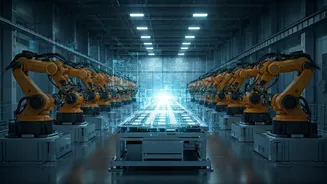
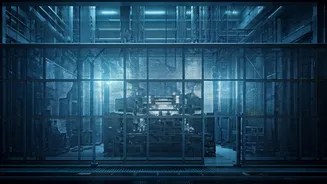
Elon Musk's vision for self-sufficiency in chip manufacturing is manifesting in the form of 'Tera-fab,' a colossal fabrication plant slated for construction near Tesla's current headquarters and gigafactory in Austin, Texas. This state-of-the-art facility will be a collaborative effort, jointly operated by Tesla and SpaceX, both companies under Musk's leadership. The 'advanced technology fab' is being equipped with all necessary machinery and expertise to produce and rigorously test a wide spectrum of chip types. The ultimate goal is for Tera-fab to eventually contribute a staggering terawatt of computing power annually, a crucial objective as Musk intensifies investments in AI and robotics. This ambitious undertaking signifies a direct response to the urgent need for chips, with Musk stating the stark choice: either build Tera-fab or face a critical shortage that would impede progress across his diverse technological frontiers.
Specialized Chip Production
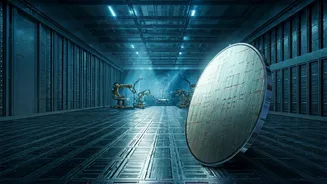
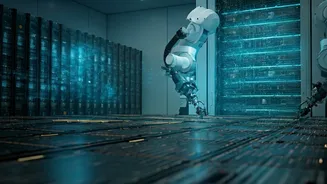
The Tera-fab facility is engineered to produce cutting-edge 2-nanometre chips, pushing the boundaries of semiconductor technology. This advanced manufacturing capability will yield an impressive 100 to 200 gigawatts of computing power per year for terrestrial applications and a remarkable terawatt for use in space. The factory will focus on manufacturing two primary categories of chips. The first type is optimized for edge computing and AI inference, making them ideal for deployment in devices like Tesla's robotaxis and the Optimus humanoid robots, enabling real-time decision-making and complex task execution. The second category comprises high-power chips specifically designed for SpaceX's ambitious orbital data centers and xAI, a subsidiary of SpaceX. According to Musk, the majority of these sophisticated chips will be allocated to xAI, underscoring the central role of artificial intelligence in his long-term strategy.
Orbital Data Centers
Beyond terrestrial applications, Musk harbors grand aspirations for a network of orbital data centers, a concept that begins with the development of a compact 'mini' AI data center satellite. This initial satellite is envisioned to deliver 100 kilowatts of computing power, serving as a foundational element for a much larger constellation. Each component in this grand design could potentially scale up to megawatt-range computing capabilities, according to the tech magnate. His vision extends even further, with reported intentions to launch satellites from the lunar surface as part of a broader objective to foster an era of 'amazing abundance.' In pursuit of this ambitious goal, Musk has formally approached the US Federal Communications Commission (FCC) seeking authorization to deploy one million data center satellites into Earth's orbit, a proposal that has already encountered opposition from Amazon's Project Kuiper satellite division.