
Rosemary's Rise
In recent years, rosemary oil has become a trending topic on platforms like TikTok, with countless videos showcasing individuals who swear by its ability
to stimulate hair growth. These users often share claims of significant improvements in hair thickness and length after incorporating the oil into their routines. This online enthusiasm has created a buzz, leading many to view rosemary oil as a readily available, natural remedy for hair thinning. The accessibility and perceived simplicity of rosemary oil have made it an appealing option for those seeking solutions outside the realm of traditional medicine. However, while the internet promotes this natural remedy, medical professionals suggest a more cautious approach, urging us to analyze the scientific backing for such claims carefully.
The Study's Impact
The excitement surrounding rosemary oil's effects often stems from a 2015 study that contrasted topical rosemary oil with 2 percent minoxidil (Rogaine) in men with androgenetic alopecia, which is male pattern baldness. The study showed similar outcomes for both treatments after a six-month period. This result has been broadly shared on social media, fueling the belief in rosemary oil's efficacy. However, experts have cautioned against overstating the results due to limitations such as a small participant group, a relatively short follow-up period, and the absence of a placebo group. This critical component is essential in modern clinical research. Without a placebo to compare with, it is difficult to determine how much of the observed effect is caused by the treatment itself.
Expert Insights
Dermatologists do not completely disregard rosemary oil's potential. They acknowledge it might contribute to better scalp health or offer mild advantages for some users, particularly when combined with proven treatments. However, experts emphasize that it should not be seen as a universal cure or as a replacement for treatments backed by substantial evidence. Hair loss is frequently multifaceted, with no single cause or easy solution. Rosemary oil may be incorporated into a larger hair care plan, but it is unlikely to reverse hair loss dramatically on its own. Moreover, it is crucial to recognize that the biological complexity of hair loss makes it vulnerable to oversimplified or exaggerated claims, as highlighted by Oma Agbai, an associate clinical professor of dermatology.
The Science Explained
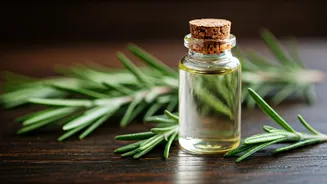
Rosemary oil, extracted from the rosemary plant, is frequently included in hair and skincare products. The rationale for its use appears sound: rosemary has anti-inflammatory and antimicrobial properties, which may improve scalp blood circulation and decrease inflammation, contributing to overall scalp health. Some research proposes that rosemary oil might weakly inhibit the enzyme responsible for converting testosterone into DHT (dihydrotestosterone). Other studies indicate it might reduce DHT's ability to bind to androgen receptors within hair follicles. That is where the potential benefit lies, but it's limited, and there is no solid proof that it treats other types of hair loss.
Limitations and Realities
The research suggests that rosemary extract has not been proven to reduce shedding consistently or notably boost hair growth. There is no reliable evidence that it treats other kinds of hair loss, including telogen effluvium (stress- or illness-related shedding), alopecia areata (autoimmune-related patchy hair loss), or scarring alopecia. Furthermore, Adam Friedman, professor and chair of dermatology at the George Washington University School of Medicine and Health Sciences, pointed out that the results for androgenetic alopecia are partly driven by hormones like androgens, and there is no magic solution. When androgen levels, particularly DHT, are high, or when hair follicles are highly sensitive to these hormones because of genetics or environmental factors, follicles can shrink, leading to thinning hair and a shorter growth cycle.