







Cowork's Enterprise Leap
Following its initial market impact, AI innovator Anthropic is rolling out significant upgrades to its Claude Cowork system. This advanced AI model, designed
to perform tasks within a user's existing digital environment, is now more readily available to businesses. The latest enhancements include a suite of plugins and connectors that empower enterprises to augment their employees' capabilities. Previously introduced in a research capacity, the system caused considerable market ripples due to AI's perceived disruptive potential. Starting February 24th, companies can integrate Claude Cowork with their current applications, such as Google Drive and Gmail. Furthermore, they have the option to deploy custom plugins tailored for specific sectors like finance, engineering, and human resources, embedding unique institutional knowledge and operational procedures directly into the AI.
Customization and Accessibility
Anthropic's official blog highlighted the introduction of updates to Cowork and its plugins, specifically designed to tailor Claude to individual work styles within enterprises. These plugins effectively transform Claude into specialized agents, each suited for particular roles and departments. The company also announced the capability for organizations to establish private marketplaces for distributing these custom agents throughout their operations. Kate Jensen, head of Americas at Anthropic, conveyed the company's objective to make the technology more user-friendly and accessible for a broader audience. Despite investor concerns leading up to the announcement, Peter McCrory, Anthropic's head of economics, stated that the company has not yet observed concrete evidence of widespread job displacement in the labor market as a direct result of these advancements.
Dominating Enterprise AI
Anthropic has successfully established a significant presence in the enterprise AI sector, which is reportedly responsible for approximately 80 percent of its revenue. However, the competitive landscape is intense, with major players like OpenAI and Google actively pursuing the same lucrative enterprise clients. This rivalry compels Anthropic to accelerate its innovation and clearly differentiate its offerings. To maintain its edge, Anthropic is moving beyond standard chatbot functionalities with solutions like Claude Cowork. This system is specifically engineered for the workplace, aiming for deep integration into how companies operate. Claude Code, in particular, has reportedly gained considerable favor with engineering teams and is expected to see widespread adoption across various knowledge-based professions. The company anticipates that Cowork will become an integral part of the daily routine for even non-technical employees, offering more than a simple chat interface.
Productivity and Integration
Claude Cowork distinguishes itself by accessing real-time information through internal company connectors, providing crucial administrative oversight that enterprises require. According to Anthropic, Cowork is capable of delivering a substantial boost in productivity, enabling a significantly greater volume of work to be accomplished. This deep integration and contextual awareness allow the AI to perform tasks that are highly relevant and efficient within a business's specific operational framework. Unlike traditional tools, it operates directly within the company's ecosystem, making it a powerful asset for streamlining complex workflows and enhancing overall output for various departments and individual roles.
Online Reaction and Market Impact
The recent announcements from Anthropic have elicited a wide spectrum of reactions online, ranging from enthusiastic embrace to considerable anxiety and even outright panic regarding the future of enterprise operations, software markets, and employment. On various tech forums and social media platforms like X, users are actively analyzing the potential effects of Cowork and related Claude updates. Many perceive this agent-style automation as a significant disruptor to established Software as a Service (SaaS) and IT service models, contributing to notable sell-offs in software and IT stocks. Conversely, some market analysts suggest this could represent a genuine transformation in how knowledge-based work is conducted, while others dismiss it as temporary market volatility. Humorous takes and memes are also circulating, reflecting the diverse interpretations from groundbreaking automation to exaggerated fear-mongering.
Case Study: IBM's Stock Dip
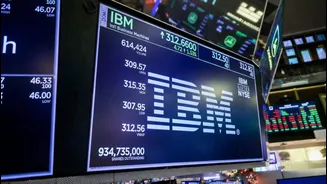
Earlier in the week, following Anthropic's declaration that its Claude Code tool would be utilized to modernize legacy systems reliant on the COBOL programming language, IBM's stock experienced a decline. The company's shares closed the trading day down by approximately 13.2 percent, settling at $223.35. IBM has historically provided mainframe systems that are essential for handling high-volume transaction processing, an area where COBOL remains a critical component. This specific event highlights the market's sensitivity to advancements in AI that directly address or potentially challenge established technological infrastructures and the companies that support them, underscoring the broader anxieties surrounding AI's disruptive capabilities.