
Early Breeding Observed
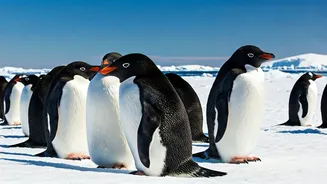
The research has shown that penguins in Antarctica have been observed breeding earlier than their typical schedules. This unusual shift signifies a potential
alteration in their biological cycles. This change has triggered a wave of scientific studies to comprehend the underlying elements contributing to this shift. These studies aim to identify the specific factors that are influencing the penguins' reproductive timing and what consequences these changes might lead to. The penguins' earlier breeding behavior is a notable change. Scientists are actively investigating the environmental factors, climate variations, and food availability, as some probable elements that may be influencing the timing of breeding season, in order to gain a better understanding.
Climate's Influence Examined
Climate change is considered a key factor in Antarctica, altering the environment for penguins. Rising temperatures and shifts in ice conditions are potentially influencing the timing of breeding for these creatures. Scientists are now investigating how these environmental changes affect the food chain that sustains penguins, and how this could change the timing of the penguins’ breeding season. The melting of ice impacts the availability of food sources for penguins like krill and fish, which in turn influences the optimal time for breeding. As conditions in Antarctica transform, the penguins' reproductive patterns are likely to be affected. Ongoing studies focus on evaluating the direct impacts of climate change and how it affects the overall ecosystem dynamics in which penguins thrive.
Food Availability’s Role
The availability of food significantly affects when penguins breed. Factors like krill, a crucial food source for many penguin species, can fluctuate based on changing ocean conditions. When food is plentiful, penguins may begin breeding earlier because they have better access to the resources needed to raise their chicks. Conversely, when food supplies are scarce, breeding is often delayed. Scientists are examining the correlation between food sources and penguin breeding times to understand how these factors affect the penguin population in Antarctica. This includes analyzing the links between prey availability and changes in the reproductive strategies to predict potential long-term impacts on penguin populations.
Ecosystemic Ramifications Explored
The earlier breeding of penguins could have widespread repercussions throughout the Antarctic ecosystem. Changes in breeding schedules may affect the dynamics of the food web, as well as the balance between different species. For instance, alterations in breeding cycles could affect predator-prey relationships. Shifts in breeding patterns can impact the timing of other animals' lifecycles, and these kinds of changes can create imbalances. Scientists are now studying these cascading effects to understand how penguins' breeding changes will affect the biodiversity and stability of the Antarctic environment. These studies help to understand the long-term changes, and highlight the significance of monitoring and protecting the Antarctic ecosystem, which includes the effects of global climate change.
Future Research Directions
The ongoing research on the early breeding of penguins emphasizes the need for continuous monitoring and further investigation. Scientists are using various tools, including satellite imagery and long-term data collection, to monitor changes in penguin breeding patterns and related environmental factors. Future studies will likely focus on improving the precision of predictions about how climate change and other environmental factors will affect penguin populations and their habitat. Understanding the complex interplay between climate, food availability, and the biological responses of penguins will be crucial in devising effective strategies for conservation and environmental management. Research efforts seek to enhance understanding of the ecosystem's resilience and adaptability to changing circumstances in Antarctica.