






Choosing Your Ginger
The journey begins with selecting viable ginger rhizomes, those knobby, tan-colored root structures from which the ginger plant emerges. These rhizomes, often
referred to as 'seed ginger', are the starting point for your balcony garden. Opt for rhizomes that are firm, plump, and show healthy 'eyes' or buds – the small points from which shoots will eventually sprout. Avoid rhizomes that appear shriveled, moldy, or damaged, as these are unlikely to produce a successful crop. To ensure a good start, purchase your seed ginger from a reputable garden center or nursery. Local markets may also offer suitable ginger, especially if you are familiar with the quality. When selecting, check for a fresh, vibrant appearance, indicating the ginger is still full of life and ready to grow. Ideally, you want to get ginger that hasn't been treated with growth inhibitors, which can sometimes be found in store-bought ginger.
Potting & Preparation
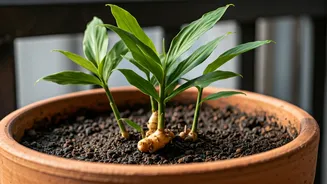
Choosing the right pot and soil is vital for ginger's success. Ginger plants require a spacious pot, as their rhizomes spread horizontally. A pot at least 12 inches deep and wide is recommended; the larger, the better, for optimal growth. Terracotta or plastic pots with drainage holes at the bottom are good choices to prevent waterlogging, which can cause the rhizomes to rot. Next, prepare a well-draining potting mix that retains moisture but allows excess water to escape. A blend of garden soil, compost, and perlite or coarse sand creates the ideal environment. Fill the pot about two-thirds full with the potting mix. Before planting, consider soaking your ginger rhizomes in water for a few hours. This can help to awaken the buds. Place the ginger rhizomes horizontally in the pot, with the buds (eyes) facing upwards. Space the rhizomes a few inches apart. Cover the rhizomes with approximately two inches of potting mix, and water them gently.
Watering and Light
Correct watering and lighting are key to ginger's health. Ginger plants thrive in consistently moist soil, but they don’t like to sit in water. Water regularly, ensuring the soil is moist but not soggy. During the growing season, which is typically from spring to fall, you might need to water your ginger plants several times a week, especially in warmer weather. Check the soil moisture by inserting your finger a couple of inches deep. If it feels dry, it's time to water. Ginger also loves sunshine. Place the pot in a location that receives at least 4-6 hours of direct sunlight each day. If your balcony doesn’t get enough direct sunlight, consider using a grow light, especially during the colder months. Observe your plant. If the leaves start to yellow, it could be a sign of overwatering or insufficient light. Conversely, brown leaf tips may indicate underwatering or dry air. Adjust your care accordingly.
Feeding Your Ginger
Fertilizing your ginger plant fuels its growth. During the growing season, feed your ginger with a balanced liquid fertilizer, diluted to half strength, every two to four weeks. Choose a fertilizer that is rich in nitrogen, phosphorus, and potassium, the essential nutrients for plant growth. Alternatively, organic options like compost tea or well-rotted manure tea can provide a slow release of nutrients and improve soil health. Avoid over-fertilizing, as this can lead to excessive foliage growth at the expense of rhizome development. Always follow the instructions on the fertilizer package, and water the plant thoroughly after feeding to prevent fertilizer burn. Watch for signs of nutrient deficiencies, such as yellowing leaves or stunted growth, which can indicate the need to adjust your feeding schedule or fertilizer type. Adjust the feeding as the plant matures. Reduce feeding frequency in the dormant season during colder months.
Common Ginger Issues
While ginger is generally a hardy plant, it is still vulnerable to certain issues. Pests like aphids, spider mites, and mealybugs may appear. Regularly inspect your plants for signs of these pests, such as small insects, webbing, or sticky residue on the leaves. If pests are present, treat them promptly with insecticidal soap or neem oil. Make sure the affected areas are thoroughly covered. Root rot is a common disease in ginger, caused by overwatering or poor drainage. Symptoms include yellowing leaves, wilting, and a foul odor. To prevent root rot, ensure the soil drains well and avoid overwatering. Fungal diseases can also affect ginger. To prevent fungal issues, ensure proper air circulation, avoid overhead watering, and consider using a fungicide if necessary. Remove any diseased leaves or plant parts promptly to prevent the spread of diseases. A healthy plant is less susceptible to pests and diseases.
Harvesting Adrak
Patience is important for ginger harvesting. Ginger typically takes about 8 to 10 months to mature, though this varies depending on the climate and growing conditions. The ideal time to harvest ginger is when the leaves start to yellow and die back, usually in late fall or early winter. To harvest, gently loosen the soil around the plant using a trowel or your hands. Carefully dig around the base of the plant to unearth the rhizomes. Gently pull the rhizomes from the soil, taking care not to damage them. Shake off the excess soil and trim the roots. You can harvest some ginger as needed throughout the growing season. Just dig carefully to remove a portion of the rhizome without disturbing the main plant. After harvesting, clean the ginger rhizomes and store them in a cool, dry place. Ginger can be stored in the refrigerator for several weeks or frozen for longer-term storage. Enjoy your homegrown adrak in your favourite recipes!