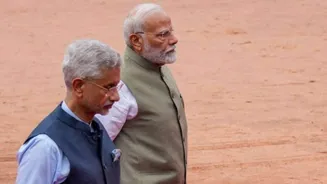









India's Economic Might
India's economy is a significant player on the world stage, with a GDP of $3.36 trillion. This figure demonstrates the substantial scale of India's economic
activities, encompassing various sectors from agriculture and manufacturing to services. The GDP, a key measure of a nation's economic health, reflects the total value of goods and services produced within a country's borders. India's impressive GDP reflects its vast population, diverse industries, and growing influence in global markets. This economic strength provides a foundation for infrastructure development, poverty reduction programs, and advancements in healthcare and education. The continuous growth in its GDP is indicative of India’s economic dynamism and rising status on the global platform.
Global Economic Landscape
When assessing the global economic context, the United States stands out with a substantial GDP of $38.27 trillion, positioning it as the world's leading economic power. China follows closely, recording an impressive GDP of $18.68 trillion, underscoring its rapid economic expansion and global influence. Japan’s economy, with a GDP of $9.83 trillion, ranks among the world's largest, highlighting its technological advancements and established industries. Germany’s GDP, at $3.23 trillion, further emphasizes the strength of the European Union, demonstrating its key role in global trade and manufacturing. The United Kingdom, with a GDP of $4.09 trillion, represents a significant economy with a strong financial sector. These figures paint a vivid picture of the global economic hierarchy.
Comparing Regional Economies
Italy's economy is valued at $3.48 trillion, demonstrating its significance in the European context and its contributions to global trade. France follows closely, with a GDP of $3.92 trillion, illustrating its robust economy. Canada's GDP, at $2.60 trillion, shows its stable economic performance and its resource-rich profile. Brazil's economy, valued at $2.06 trillion, reflects its substantial influence in Latin America and its diverse economic activities. These figures offer insights into the different economic strengths and strategic focuses across various regions worldwide, showcasing the intricate web of global financial interdependencies.
Economic Indicators Explained
The Gross Domestic Product (GDP) is a critical indicator used to assess a nation's economic performance. It is a comprehensive measure of the total value of all goods and services produced within a country's boundaries over a specific period, usually a year. GDP provides a valuable measure of economic activity and overall economic health. Several factors influence a nation’s GDP, including consumer spending, investment, government expenditures, and net exports. Monitoring a nation's GDP enables economic analysts and policymakers to evaluate the pace of economic growth or contraction. A rising GDP generally indicates economic expansion, whereas a decline may signal a recession.
India's Global Standing
India's GDP of $3.36 trillion places it in a significant position among the world's economies. While it may not top the rankings compared to the United States or China, India's economic size shows its substantial influence on the global stage. India’s continuous economic growth and strategic importance offer a significant impact on international trade, investment, and geopolitical dynamics. The nation's ability to foster economic expansion, attract investments, and advance various sectors makes it a critical player in the global economy. India’s strategic location, growing workforce, and increasing consumption all indicate its importance in shaping the future economic trends.
Factors Affecting GDP
Various factors can influence a nation's GDP. Consumer spending is one of the most significant drivers of economic activity, as it constitutes a large percentage of total GDP. Investment, encompassing business spending on new equipment, infrastructure, and housing, is another important factor driving economic growth. Government expenditure plays a role through investments in infrastructure, social programs, and public services. International trade, including exports and imports, significantly impacts a country's GDP. Economic policies, such as interest rates and tax policies, also influence economic growth. An understanding of these elements helps economists and policymakers assess a country’s economic situation.
Future Outlook for India
India's economic future looks promising. With a growing population, strategic governmental initiatives, and rising domestic consumption, the nation is poised for continued growth. India's commitment to technological advancements and infrastructure development will further boost economic productivity. The nation's ability to attract foreign investment and build strong relationships with other countries also enhances its economic prospects. With constant innovation and strategic investment in key sectors, India is expected to maintain steady economic expansion and contribute significantly to global economic advancement. The continued focus on sustainable practices and inclusive growth will be crucial for long-term prosperity.