




The Sitar's Melody
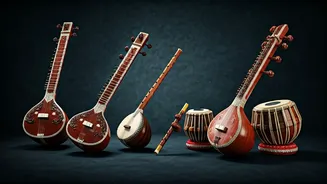
The sitar, a plucked stringed instrument, is a cornerstone of Hindustani classical music. Its design includes a long neck and a gourd-shaped body, and it typically
features 18-21 strings, including main playing strings and sympathetic strings that resonate to create a rich, layered sound. The sitar’s origins can be traced back to the 13th century, evolving from Persian instruments. It gained prominence through the Mughal era, blending Persian and Indian musical traditions. The instrument is played with a plectrum called a mizrab, which plucks the strings, creating its signature shimmering sound. Famous sitar players have significantly contributed to its global recognition, showcasing its versatility and depth. The sitar continues to be a symbol of Indian musical artistry.
The Shehnai's Resonance
The shehnai, a double-reed wind instrument, is known for its auspicious sounds, often played at weddings and ceremonies across India. Its construction includes a wooden body with a flared metal bell, producing a sound that is both penetrating and sweet. The shehnai is believed to have evolved from the pungi, a folk instrument used by snake charmers. It gained prominence in the 18th century, becoming a staple in classical and folk music. The instrument's sound carries beautifully, making it ideal for outdoor performances and festive occasions. The shehnai is commonly associated with celebrations and is a vital part of Indian cultural expression.
Tabla's Rhythms Begin
The tabla, a pair of hand drums, forms a crucial part of Hindustani classical music, driving the rhythm with its complex beats. The tabla consists of two drums: the tabla (right drum) and the bayan (left drum). The tabla is made from wood, while the bayan is often crafted from metal or clay. It's tuned to a specific pitch, allowing for intricate rhythmic patterns. The tabla's origins are debated, but it is believed to have evolved from various percussion instruments over several centuries. It became prominent during the Mughal period, with masters developing sophisticated playing techniques. Tabla players use their fingers and palms to produce a wide range of sounds. The tabla is celebrated for its rhythmic complexity, accompanying vocalists, instrumentalists, and dancers.
The Veena's Legacy
The veena, a stringed instrument, is one of the oldest instruments in Indian music, dating back thousands of years. It’s played in both Carnatic and Hindustani classical traditions, recognized for its deep, resonant tones. The veena’s structure consists of a large, gourd-shaped body, a long neck, and strings. Different types of veenas exist, varying in size and design. It's often associated with the goddess Saraswati, symbolizing knowledge, music, and the arts. The veena has a long history, with depictions found in ancient sculptures and texts. Playing the veena requires precision and skill, with players using their fingers to pluck the strings, creating melodic compositions. The veena’s sound evokes a sense of serenity and is considered a cornerstone of Indian musical heritage.
The Bansuri’s Serenity
The bansuri, a bamboo flute, is a simple yet powerful instrument that embodies the soul of Indian folk and classical music. It is constructed from a single length of bamboo, with finger holes and a blowing hole. The bansuri creates a soothing, melodious sound, often associated with nature and spirituality. Its origins are ancient, with historical references dating back thousands of years. The bansuri's sound is produced by blowing across the open hole, creating a clear and expressive tone. Famous bansuri players have elevated it to new heights, showcasing its versatility. The instrument is a symbol of pastoral life and is often associated with Lord Krishna.
The Santoor's Echoes
The santoor, a hammered dulcimer, is a trapezoid-shaped instrument with numerous strings that produce shimmering sounds. It originated from the Persian santur and made its way into Indian classical music. The santoor is played with two small wooden mallets. Its distinctive sound creates a sense of ethereal beauty. It is believed to have been brought to India from Persia in the medieval period and adapted to Indian musical styles over time. Each note is produced by striking the strings with the mallets, creating complex patterns and melodic lines. The santoor is known for its ability to create a wide range of expressive sounds. The instrument's popularity has grown significantly over the years, making it an integral part of Indian classical music concerts and recordings.
The Mridangam's Rhythm
The mridangam, a double-sided drum, is a key percussion instrument in Carnatic music. It provides the rhythmic foundation for vocal and instrumental performances. This drum has a barrel-shaped body, with heads made from animal skin stretched over the ends. The mridangam is tuned to specific pitches, allowing for a variety of rhythmic possibilities. Its origins can be traced to ancient South Indian traditions, evolving over centuries to its current form. The drum is played with the hands, using different techniques to create a range of tones and beats. Mridangam players master complex rhythmic patterns, complementing the melodies. The instrument is a symbol of South Indian musical heritage, an essential part of temple ceremonies, classical concerts, and cultural events.