
Mission Overview
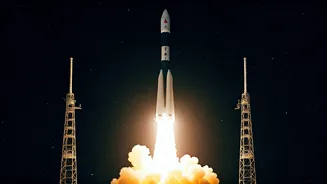
ISRO's PSLV-C62 mission, planned for 2026, was a significant undertaking for India's space program. The primary objective was to launch the PSLV-C62 rocket,
accompanied by a collection of 14 additional satellites. This mission underscored India's commitment to advancing its space capabilities and expanding its presence in the global space market. The Polar Satellite Launch Vehicle (PSLV) is known for its reliability and versatility, making it a workhorse for ISRO. It is designed to carry various payloads into different orbits, including sun-synchronous and geostationary transfer orbits. The selection of the launch site, Sriharikota, is crucial for optimal launch trajectories and performance. The mission's success would have marked another milestone in ISRO's illustrious journey, building upon its past achievements and further solidifying India's position in the global space arena.
Launch Details
The PSLV-C62 mission from Sriharikota was a highly anticipated event. The launch was a complex operation that involved intricate planning and meticulous execution. The launch sequence encompasses several stages, each requiring precision and flawless functionality. The PSLV rockets go through a rigorous preparation process, including checks on the rocket's propulsion systems, structural integrity, and payload integration. The launch itself would have been a spectacle, with the rocket ascending into the sky, carrying its valuable cargo into orbit. Real-time data and telemetry would have been continuously monitored to ensure the mission's success. The anticipation among scientists, engineers, and space enthusiasts was high as they eagerly awaited the successful deployment of the satellites. The planned mission was a showcase of India's technological prowess and commitment to space exploration, which would have reinforced the country's status on the world stage.
Unexpected Anomaly
The PSLV-C62 mission experienced an unexpected setback. The rocket deviated from its planned flight path, marking an anomaly in its trajectory. This unforeseen event necessitated a thorough investigation to identify the root cause and implement corrective measures. ISRO's team of experts would have immediately initiated a comprehensive analysis to pinpoint the exact nature of the anomaly. This investigation would involve examining data from various sources, including telemetry readings, onboard sensors, and ground-based observations. The primary goal would be to understand the circumstances that led to the deviation, ensuring a similar issue does not arise in future missions. The resolution could involve software adjustments, hardware modifications, or operational procedure revisions. Such setbacks are a part of the challenging journey of space exploration and provide valuable lessons. These insights are essential for continuous improvements and ensuring the reliability of future space missions, fostering continuous innovation in the space program.
Future Implications
The anomaly encountered by the PSLV-C62 mission could have implications for ISRO's future space endeavors. It is essential to conduct a thorough analysis and implement corrective actions before proceeding with subsequent missions. This process might lead to schedule adjustments, requiring re-evaluation of launch timelines and resource allocation. The insights gained from the investigation would inform the design and development of future rockets, ensuring the robustness and reliability of upcoming missions. ISRO's engineers would integrate the learnings from this event into the development of future space programs, which is crucial for achieving the nation's ambitious space exploration goals. This also provides an opportunity to reassess existing protocols and incorporate innovative technologies to minimize the risk of anomalies in future launches. The dedication to improving, from even the most minor disruptions, underscores ISRO's commitment to pushing the boundaries of space exploration.