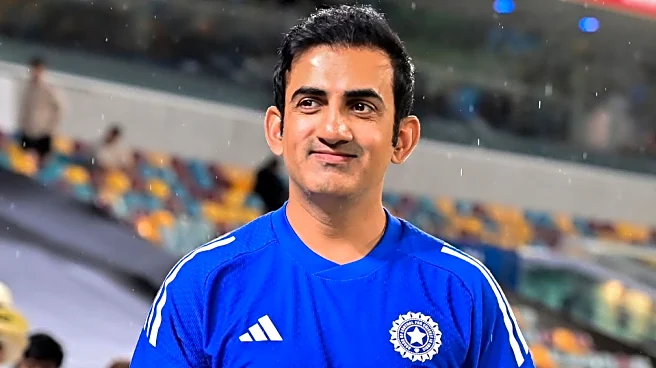

India head coach Gautam Gambhir recently opined that the batting order, especially in a One-Day International game, is highly overrated. The statement came in the midst of India's 2-1 series win against
South Africa, where the skipper KL Rahul was constantly floated to bat at different positions in the middle order according to the team's needs, and excelled with a couple of half-centuries in the three-match series.
Commenting on Gambhir's opinion, legendary South Africa batter AB de Villiers has said that he does agree that there should be flexibility in the batting orders. According to him, having a dynamic batting line-up in the side can actually help the team tackle different challenges in different conditions of the match, especially since 50 overs is a long time to make or lose a momentum.
"I do agree with him to a certain extent. I've always enjoyed a floating batting line-up in ODIs. But it's a fine line because you can't really play around too much with the players' roles. It's the top three, four to six, and then your tail-enders who can hold the bat. It's almost like three segments, and you can really be creative with that. Play with right and left-hand combinations and certain situations of the game," de Villiers expressed in a video on his YouTube channel.
The former keeper-batter also feels that the left-hand-right-hand combination for batters works wonders for the sides, especially in white-ball cricket. De Villiers lauded Gambhir for sticking to his mantra of maintaining a left-right combo in the Indian team, which has eventually resulted in them winning the Champions Trophy as well as the Asia Cup in 2025.
"It has been incredible, especially for a T20 format. It's the most volatile format of the three, and to have that kind of consistency tells you there must be something going on that's heading in the right direction. I think it's got to do with the depth of Indian cricket," de Villiers added.
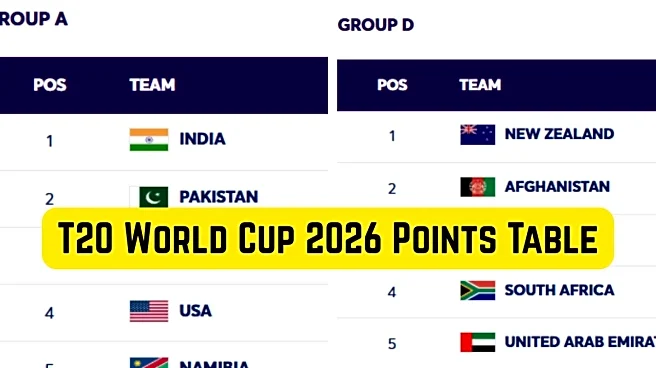
India's next challenge will be to compete and defend their title at the 2026 T20 World Cup, which begins on February 7. India will also be co-hosting the event alongside Sri Lanka, and barring their game against Pakistan, all the matches will be played at home, with Ahmedabad, Chennai, Kolkata, Mumbai, and New Delhi hosting the matches for the 20-team tournament.