



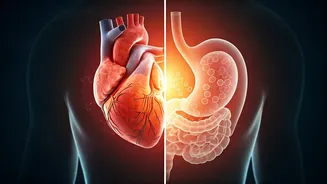

A Surprising Serotonin Connection
Recent scientific investigations have illuminated an unexpected relationship between serotonin, a neurochemical widely recognized for its influence on mood,
and the development of heart valve disease. Researchers have identified that elevated serotonin levels can actively encourage the proliferation of fibrotic tissue within the heart's valves. This process leads to a thickening and subsequent malfunction of these critical structures, offering a novel perspective on how this prevalent cardiovascular ailment develops. The published findings, originating from an extensive analysis of over 10,000 patient records, highlight a significant correlation: individuals with higher serotonin concentrations exhibited a markedly increased likelihood of experiencing severe heart valve disease. The scientific team pinpointed a specific biological pathway through which serotonin instigates the excessive growth of fibroblasts – cells responsible for producing vital extracellular matrix components like collagen. This overproduction of fibrotic material can result in valve stiffness, severely impeding their ability to function correctly during the cardiac cycle. This discovery fundamentally shifts our understanding of serotonin's broader impact beyond its well-known neurological functions, opening doors to new therapeutic strategies.
Understanding Valve Dysfunction
The heart's mitral valve, crucial for directing blood flow between the left atrium and left ventricle, can fall victim to a condition known as degenerative mitral regurgitation (DMR). Under normal physiological circumstances, this valve seals precisely with each heartbeat, ensuring unidirectional blood movement. However, in DMR, the valve progressively loses its structural integrity, becoming misshapen and incapable of achieving a complete seal. This inadequacy results in the backward leakage of blood towards the lungs, consequently diminishing the heart's pumping efficiency. The body attempts to compensate by forcing the heart to work harder, which can, over time, lead to the stretching and weakening of the cardiac muscle. Early manifestations of DMR are often subtle, with individuals experiencing fatigue or mild breathlessness. As the disease progresses, it escalates the risk of serious complications such as atrial fibrillation, heart failure, and other related cardiac issues. Affecting millions globally, particularly among the elderly population, DMR stands as one of the most common valve disorders. Currently, there is no pharmacological intervention capable of reversing the inherent damage to the valve itself; medications can only alleviate symptoms and ward off complications, not treat the underlying pathology. When the degeneration becomes severe, surgical intervention, either repair or replacement of the valve, becomes the necessary course of action.
The Serotonin Transporter's Role
Serotonin, while predominantly recognized for its neuromodulatory functions in mood, sleep, digestion, and blood clotting, operates by binding to specific cellular receptors to elicit responses. Following its action, a protein known as the serotonin transporter (SERT, or 5-HTT) facilitates the reabsorption of serotonin back into the cell for subsequent reuse. This recycling mechanism is precisely what selective serotonin reuptake inhibitors (SSRIs), a common class of antidepressants including fluoxetine and sertraline, target. By inhibiting SERT, these medications enhance serotonin availability in the brain. However, it is a less commonly understood fact that serotonin signaling extends beyond the central nervous system to encompass tissues like the heart. Prior research had already suggested a link between aberrant serotonin activity and valve thickening, particularly in rare instances related to specific drug exposures. This prior knowledge prompted scientists to explore whether a comparable biological process might be at play in more common valve conditions like DMR, leading to the current in-depth investigation.
Data Insights and Animal Models
The research team meticulously examined the medical records of over 9,000 patients who underwent surgery for DMR, alongside a detailed analysis of 100 mitral valve tissue samples. Their findings revealed a distinct pattern: patients who were prescribed SSRIs generally required surgical intervention at an earlier age compared to their counterparts not using these medications. This observation led the scientists to delve deeper into the underlying mechanisms using animal models. Experiments conducted on mice genetically engineered to lack the SERT gene demonstrated a significant thickening of their mitral valves. Furthermore, normal mice administered high dosages of SSRIs exhibited comparable structural changes in their valves, strongly suggesting that a reduction in serotonin reuptake directly influences valve tissue architecture. These experimental results provided crucial corroborative evidence for the epidemiological findings, solidifying the hypothesis that altered serotonin transport plays a tangible role in the progression of mitral valve disease.
Genetic Influence on Risk
The study also identified a genetic predisposition that appears to modulate an individual's risk profile for developing severe heart valve disease. Variations within a specific genetic region known as 5-HTTLPR have been shown to affect the operational efficiency of the SERT protein. Individuals possessing two copies of the so-called 'long' variant of this gene exhibit diminished SERT activity within their mitral valve cells. Among the cohort of DMR patients, those who carried this 'long-long' genetic pattern were found to be more likely to necessitate surgical intervention than patients with alternative genetic configurations. At a cellular level, this genetic makeup renders valve cells more hypersensitive to serotonin's influence, prompting an exaggerated production of collagen. This excess collagen deposition leads to the gradual stiffening and distortion of the valve over time. Notably, these same cells demonstrated a more pronounced reaction to fluoxetine, indicating a potential interaction between genetic factors and pharmacological interventions that could impact disease trajectory.
Implications for Patient Care
The implications of these findings are significant, paving the way for a more individualized approach to managing mitral valve disease. The possibility of utilizing a straightforward genetic test, obtainable from a simple blood sample or mouth swab, could help pinpoint patients with inherently lower SERT activity who face a heightened risk of rapid disease progression. Identifying individuals with DMR who exhibit low SERT activity might enable earlier surgical intervention, as suggested by researchers. Promptly addressing a severely leaky mitral valve could offer substantial protection to the heart and potentially avert the onset of congestive heart failure. However, it is crucial to emphasize that SSRIs are generally considered safe and effective for the vast majority of individuals. The study did not detect any detrimental effects in individuals with healthy mitral valves, even when their SERT activity was low. A healthy mitral valve appears robust enough to withstand low SERT activity without deformation. It is unlikely that low SERT activity alone would initiate valve degeneration. SSRIs are typically safe for most patients, but once a mitral valve begins to degenerate, it may become more susceptible to the effects of serotonin and reduced SERT function.
Broader Serotonin Pathways
Subsequent research has begun to suggest that these findings might represent a piece of a larger, more encompassing serotonin-related mechanism contributing to valve disease, rather than being confined solely to degenerative mitral regurgitation. A study published in 2024 in Cardiovascular Pathology revealed that mice lacking the serotonin transporter not only developed thickened mitral valves but also exhibited myocardial fibrosis, compromised cardiac function, and age-associated remodeling changes across various valve structures. This work further highlighted that mitral valve cells exhibit particular sensitivity to serotonin-induced, pro-fibrotic signaling, which helps explain why the mitral valve may be exceptionally vulnerable once degenerative processes have commenced. Another follow-up study, appearing in Frontiers in Cardiovascular Medicine in 2026, shifted focus to aortic stenosis, a condition characterized by the stiffening and narrowing of the heart's aortic valve, impeding blood flow to the body. By examining human patients, mice, and laboratory-grown human valve cells, researchers discovered that periods of low SERT activity coupled with elevated HTR2B signaling were associated with increased early scarring and calcium deposition in the aortic valve. In mice, pharmacologically inhibiting HTR2B significantly reduced many of these adverse changes, indicating its potential as a therapeutic target for future treatments. These interconnected findings collectively suggest that aberrant serotonin signaling may indeed play a role in multiple types of heart valve diseases, potentially offering future avenues for identifying at-risk patients or developing therapies to slow valve deterioration.