





Ancient Convenience Food
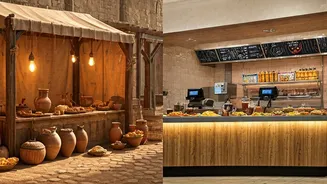
The concept of quick, convenient meals dates back millennia, far predating the modern fast-food industry. In the bustling cities of ancient Greco-Roman
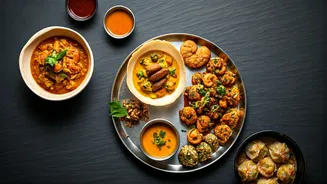
civilization, street stalls known as thermopolia offered hot, ready-to-eat dishes to urban dwellers on the go. Imagine grabbing a speedy lunch before the idea of supersized fries even existed! Similarly, in ancient China, market vendors provided travelers and laborers with hot noodles and buns. Even in Mesopotamia, one of the earliest known urban societies, evidence points to the existence of food vendors serving the community. These historical examples demonstrate that the human desire for easily accessible and satisfying food is a timeless one, driven by the need for efficiency in busy lives.
Raising Cane's Origin
The story behind Raising Cane's is as unique as its chicken fingers. Founder Todd Graves initially considered naming his restaurant "Sockeye's," inspired by the salmon he fished in Alaska to gather funds for his venture. However, a friend suggested an alternative that would become iconic: naming it after Graves' beloved Yellow Labrador Retriever, Raising Cane. This canine companion was a regular fixture at the construction site during the restaurant's early development, making the name a deeply personal and fitting choice that resonates with many customers today.
Krispy Kreme's Secret Recipe
The legendary "secret recipe" for Krispy Kreme's signature glazed doughnuts wasn't actually developed by the brand's founder. In the 1930s, Vernon Rudolph acquired both the recipe and the name "Krispy Kreme" from a New Orleans chef named Joe LeBeau. This transaction allowed Rudolph to launch the iconic doughnut business, with the distinctive recipe forming the foundation of the brand's enduring popularity and taste, a legacy that continues to delight doughnut lovers worldwide.
Panda Inn's Name
The establishment of the Panda Inn in 1973 was strategically named to capitalize on a significant cultural moment. The original sit-down restaurant was christened "Panda Inn" to leverage the surge in popularity of pandas in the United States. This "Panda-mania" was largely ignited by President Nixon's historic visit to China, which led to the ceremonial gifting of two giant pandas to the National Zoo in Washington D.C. The name thus perfectly captured the public's fascination and helped the restaurant gain immediate recognition.
Subway's Humble Beginnings
The genesis of the now-global sandwich chain began in 1956 under a different moniker: Mike's Giant Submarine Shop. Its transformation into the brand we recognize today is thanks to a devoted teenage employee. In 1971, a 14-year-old named Peter Cancro developed such a strong passion for his job that he eventually purchased the entire business from the original owner, Mike. Cancro was just 17 years old when he took full ownership, a remarkable feat that marked the start of Subway's incredible expansion.
In-N-Out's Drive-Thru Innovation
When In-N-Out Burger opened its doors in 1948, it wasn't just another hamburger stand; it was a pioneering establishment in California. This location was the state's very first drive-thru hamburger joint. At a time when most eateries relied on carhops—servers who would walk out to customers' vehicles—In-N-Out introduced a revolutionary concept: a two-way speaker system. This allowed customers to order and receive their food without ever leaving their cars, setting a new standard for fast-food service and convenience.
The Infamous Trade
Within the founding story of a major fast-food player lies an almost unbelievable cautionary tale about a business deal. The brother of one of the founders, Jim Monaghan, made what is now considered one of history's worst trades. He relinquished his 50% stake in the burgeoning business in exchange for a used 1959 Volkswagen Beetle. At the time, this might have seemed like a fair trade, but in retrospect, that half-share would now be valued in the billions of dollars, a stark reminder of the unpredictable nature of business success.
Chick-fil-A's Dwarf Roots
Long before it became known for its premium chicken and "A" grade chicken, the restaurant now known as Chick-fil-A operated under a very different name and concept. Its origins trace back to a diner called The Dwarf Grill, later renamed The Dwarf House. Founder Truett Cathy chose this name due to the restaurant's incredibly modest size; it could only accommodate ten stools and four small tables. This small, intimate setting was the birthplace of the culinary innovations that would eventually lead to the creation of one of America's most beloved fast-food chains.