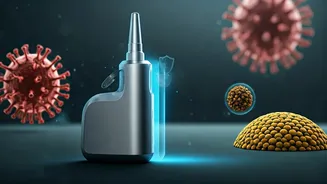








A Universal Respiratory Shield
For decades, the medical community has pursued the ambitious goal of a universal vaccine capable of defending against numerous pathogens. This long-sought
objective, often likened to a medical Holy Grail, now appears closer to realization thanks to pioneering research from Stanford Medicine and collaborators. Their experimental nasal spray vaccine, tested in mice, has shown remarkable success in conferring protection against a diverse range of respiratory dangers. This includes common viruses such as SARS-CoV-2 and other coronaviruses, significant bacterial threats like Staphylococcus aureus and Acinetobacter baumannii—frequently encountered in hospital settings—and even common allergens like house dust mites. The protection offered by this intranasal administration method has proven to be extensive within the lungs and remarkably durable, lasting for several months. This groundbreaking study, published in the prestigious journal Science, indicates a significant stride toward a future where a single vaccine could simplify protection against seasonal illnesses and swiftly counter emergent pandemic viruses.
Beyond Antigen Specificity
The novel vaccine operates on a fundamentally different principle than conventional vaccines, which have historically relied on antigen specificity since the late 1700s. This traditional paradigm involves presenting the immune system with a specific component, or antigen, of a pathogen—like the spike proteins of SARS-CoV-2—enabling the body to recognize and combat the actual threat. While effective for its intended targets, this method faces challenges as viruses mutate or new pathogens emerge, necessitating frequent updates to vaccines, such as annual flu shots and COVID-19 boosters. The limitations arise because pathogens can rapidly alter their surface antigens. Previous attempts at broader vaccines primarily focused on families of viruses, targeting less variable components. However, the concept of a single vaccine effective against entirely unrelated pathogens was largely considered unfeasible, even viewed as somewhat audacious by researchers themselves.
Harnessing Innate Immunity
Instead of mimicking specific pathogen components, the experimental vaccine is engineered to replicate the crucial signaling pathways that immune cells use to communicate during an infection. This innovative strategy bridges the innate and adaptive immune systems, fostering a cohesive and enduring defensive response. While most current vaccines primarily stimulate the adaptive immune system—which generates specific antibodies and T cells for long-term memory—the innate immune system offers a more immediate, generalized defense. This system comprises cells like dendritic cells and macrophages that rapidly attack invaders. Traditionally, research has focused less on innate immunity due to its typically short-lived activity. However, the research team was drawn to its broad protective capabilities, recognizing its potential for wider applications. Studies of the Bacillus Calmette-Guerin (BCG) tuberculosis vaccine, administered to millions of newborns annually, have suggested a similar long-lasting, cross-protective effect against unrelated infections, hinting at the power of broader immune activation.
The Mechanism of Cross-Protection
Further investigation into how this broader immunity might function, detailed in a 2023 study, shed light on the underlying mechanisms. Researchers observed that the BCG vaccine, much like conventional vaccines, activated both innate and adaptive responses in mice. Crucially, the innate immune response persisted far longer than anticipated—up to three months. This extended activity was attributed to signals transmitted by T cells, which had migrated to the lungs as part of the adaptive response. These T cells sustained the activation of innate immune cells through specific cytokine signals that interact with toll-like receptors. Building on this discovery, the researchers hypothesized that a synthetic vaccine, possibly delivered nasally, could be developed to incorporate these toll-like receptor stimuli and an antigen to effectively guide T cells to the lungs and prolong innate immune cell activity. Their subsequent work has experimentally validated this hypothesis in mice, demonstrating the feasibility of creating such a multifaceted vaccine.
How the Nasal Spray Works
The experimental vaccine, designated GLA-3M-052-LS+OVA, is specifically formulated to mimic the T-cell signals that bolster innate immune cells within the lungs. It also contains ovalbumin (OVA), a non-harmful egg protein designed to attract T cells to the lung tissue, thereby prolonging the immune response for weeks or even months. In trials, mice received nasal drops of this vaccine, with some receiving multiple doses spaced a week apart. Following vaccination, the mice were exposed to respiratory viruses. Those that received three doses showed significant protection against SARS-CoV-2 and other coronaviruses for at least three months. In stark contrast, unvaccinated mice exhibited severe illness, considerable weight loss, and many succumbed to the infections, with their lungs showing extensive inflammation and high viral loads. The vaccinated mice, however, experienced minimal weight loss, survived without issue, and had remarkably low viral counts in their lungs. This dual-action approach, described as a 'double whammy,' effectively reduces viral presence in the lungs by a substantial 700-fold, while any remaining viruses are swiftly dealt with by a highly responsive adaptive immune system.
Broad Protection Demonstrated
Encouraged by the vaccine's efficacy against viral threats, the research team expanded their investigations to include common bacterial pathogens. The vaccinated mice demonstrated robust protection against Staphylococcus aureus and Acinetobacter baumannii for approximately three months, mirroring their antiviral results. This success prompted further exploration into the vaccine's potential against other airborne irritants, leading to tests against allergens. When exposed to proteins from house dust mites—a frequent trigger for allergic asthma—the unvaccinated mice displayed a significant allergic Th2 immune response characterized by airway mucus buildup. Conversely, the vaccinated mice exhibited a suppressed Th2 response, maintaining clear airways. Based on these comprehensive findings, the researchers propose that this approach represents a viable 'universal vaccine' offering defense against a wide spectrum of respiratory challenges, encompassing viruses, bacteria, and allergens.
Path to Human Application
The next critical step for this promising research is to transition to human trials, beginning with a Phase I study focused on safety. Positive outcomes from this initial phase will pave the way for larger clinical trials, potentially involving controlled exposure to infections to further assess efficacy. Dr. Pulendran envisions that just two doses of the nasal spray vaccine might be sufficient to confer protection in humans. With adequate funding and successful trial progression, he estimates that such a universal respiratory vaccine could become accessible within five to seven years. The potential impact is immense, envisioning a future where individuals receive a single nasal spray in the fall, providing comprehensive immunity against seasonal viruses like COVID-19, influenza, RSV, and the common cold, alongside protection from bacterial pneumonia and early spring allergens. This could fundamentally transform public health strategies and individual healthcare practices.