







Solar Maximum Explained
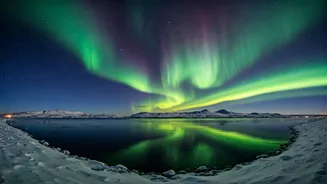
The spectacular phenomenon of the Northern Lights, also known as the aurora borealis, is poised to put on a dazzling display in 2026, and the cause is directly
linked to the Sun's activity. The Sun goes through cycles, with periods of increased and decreased activity. 2026 is projected to fall within a period known as 'solar maximum,' when the Sun's activity is at its peak. During solar maximum, the Sun releases more solar flares and coronal mass ejections (CMEs). These events send charged particles hurtling through space. When these particles encounter Earth's magnetic field, they are funneled towards the poles, where they interact with the atmosphere, creating the vibrant light displays we call the aurora borealis. The intensity and frequency of these auroras are closely linked to the level of solar activity, so 2026, with its predicted solar maximum, is primed for an exceptional show.
Why 2026 Is Special
The upcoming solar maximum in 2026 is set to be especially potent, and this heightened solar activity suggests a greater chance of seeing extraordinary auroras. A solar maximum increases the frequency and intensity of solar events, resulting in more frequent and brighter auroras. The number and power of solar flares and CMEs will be significantly higher, injecting a larger number of charged particles into space. When these particles interact with the Earth's atmosphere, they trigger more intense auroral displays, which can be seen over a wider area. It is not just about quantity; the quality of the display is expected to be enhanced, with a greater variety of colors and forms. Observers might witness auroras that extend further south than usual, making them visible to more people. With potentially more intense and frequent displays, 2026 could provide the best opportunities in years to witness the Northern Lights.
How Auroras Form
The genesis of the Northern Lights lies in a fascinating interplay between the Sun and Earth's magnetic field and atmosphere. Solar flares and CMEs eject clouds of plasma, which are made up of charged particles. These particles travel through space and, when they reach Earth, are drawn towards the planet's magnetic poles. As these charged particles collide with atoms and molecules in the Earth's atmosphere, primarily oxygen and nitrogen, they excite these atoms to higher energy levels. When these excited atoms return to their normal energy levels, they release energy in the form of light. The color of the light depends on which atmospheric gases are being excited and the altitude at which the collisions occur. Oxygen produces green and red light, while nitrogen produces blue and purple light. The resulting effect is a dynamic and colorful display across the night sky, an ethereal dance of light known as the aurora borealis.
Spotting the Lights
To maximize your chances of viewing the Northern Lights in 2026, some locations are better than others, and a few factors come into play. Regions near the Arctic Circle, like parts of Canada, Alaska, Iceland, Norway, and Finland, are prime viewing spots because of their proximity to the magnetic poles. However, because of the expected intensity of auroras, there's a good chance that the lights will be visible at lower latitudes. The best viewing conditions occur on clear, dark nights, away from light pollution. Check the geomagnetic forecast, which predicts the level of auroral activity. The higher the Kp index, the better the chances of seeing the aurora. Download aurora forecasting apps to get real-time updates and alerts. Finally, be patient, as the aurora can be unpredictable and may take some time to appear, so remain outside and keep looking up, and you may be rewarded with an unforgettable sight.