





A-23a's Remarkable Journey
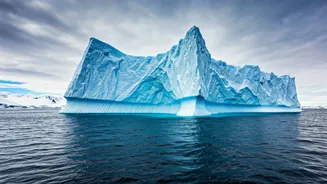
Iceberg A-23a, a colossal chunk of ice, is making waves with its unique color change. The iceberg, a detached fragment of the Filchner-Ronne Ice Shelf,
is currently moving away from Antarctica. Its size is truly immense, approximately 1,550 square miles – larger than Greater London. It has been drifting in the Weddell Sea for decades, having initially grounded in the 1980s. The recent movement of the iceberg is a testament to the dynamic nature of our planet's ice masses. Its eventual breakup signifies a critical period of change and is under intense scientific observation, providing insights into the effects of climate change on the planet's ice. The blue coloration acts as a harbinger of the final stages of its lifetime, offering scientists the chance to study the disintegration of massive ice structures.
Decoding the Blue Tint
The striking blue appearance of the iceberg A-23a is more than just a visual curiosity; it provides clues about its structural changes and impending demise. The blue color arises from the way ice interacts with light. Specifically, as the ice ages, it becomes denser, and air bubbles within it are squeezed out. This absence of air bubbles causes the ice to absorb red light and reflect blue light, creating the vivid blue color we observe. The transformation indicates that the iceberg is nearing its end stages of decomposition, as the ice becomes more consolidated. The shift towards this color is an important marker for researchers studying the behavior of icebergs and their breakup processes. Analyzing the blue tint offers valuable information about the ice's density, composition, and the environmental factors affecting its lifespan.
Breakup Prediction and Factors
Predicting the exact moment of an iceberg's breakup is difficult, but the blue coloration of A-23a indicates that the process is accelerating. The disintegration of icebergs is influenced by a range of environmental elements, including the surrounding water temperature, wave action, and air temperature. Warmer water temperatures can accelerate melting from below, while wave action can cause the ice to fracture and break apart. Air temperature also plays a role in surface melting. For A-23a, which has been drifting in the Weddell Sea for a long time, the combination of these factors is now culminating in its ultimate disintegration. The rate of the iceberg's melting and disintegration can vary, but the presence of the blue color suggests that the process is currently in an active phase. Scientists use satellite imagery and other tools to monitor the iceberg and its evolution.
NASA's Monitoring Efforts
NASA's extensive monitoring of A-23a is crucial for understanding the larger context of climate change. The space agency utilizes a diverse set of satellites equipped with sophisticated sensors and imaging capabilities to track the iceberg. This includes measuring the size and shape of the iceberg and observing its movement over time. By closely monitoring A-23a, NASA researchers gather vital data about the melting rate of the ice and how this phenomenon contributes to sea level rise. These observations are a part of a wider effort to understand the behavior of glaciers, ice sheets, and icebergs across the Antarctic region. The data collected provides valuable information that contributes to climate models and predictions. This in turn allows scientists to better understand the global impact of climate change.
A-23a's Long-Term Significance
The journey and ultimate breakup of iceberg A-23a offer valuable perspectives on climate change. It serves as an example of the kind of changes occurring in the Antarctic environment and how these events impact the global climate system. As icebergs break off, they contribute freshwater to the ocean, which can influence ocean currents and marine ecosystems. The scientific analysis of A-23a's final stages provides information regarding the stability of other ice masses and the speed at which the ice melts. The data and insights gained from studying A-23a are applicable to broader research into understanding climate patterns and future climatic predictions. This offers a more comprehensive perspective on the effects of climate change across the world and encourages a deeper grasp of its ramifications.