






A Growing Space Menace
The increasing frequency of satellite launches, particularly for massive constellations like Starlink with tens of thousands of satellites, is exacerbating
the problem of space debris. Many of these satellites, designed for operational lives of around five years, are expected to re-enter Earth's atmosphere through uncontrolled decay in the coming years. While past studies have predominantly focused on the physical danger posed by falling debris to people on the ground, the environmental consequences for our atmosphere remain largely unknown. However, scientists have noted the presence of unusual atomic and molecular substances in the upper atmosphere that cannot be attributed to natural sources like meteors. This is a significant concern, as the upper atmosphere plays a vital role in safeguarding life on Earth by shielding us from meteoroids and harmful UV radiation.
Lithium Plume Detected
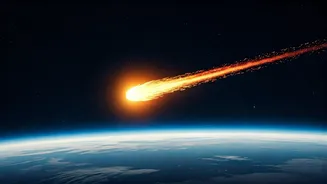
In a pioneering study, researchers meticulously tracked a plume of lithium vapor resulting from the uncontrolled re-entry of a SpaceX Falcon 9 rocket stage on February 19, 2025. The incident, occurring around 03:42 UTC off Ireland's coast at an altitude of approximately 100 km, produced a spectacular fireball and a lingering atmospheric trail. This event even garnered headlines when fragments of the rocket stage were recovered near Poznań, Poland. A team, led by scientists in Germany, employed advanced resonance fluorescence lidar technology in Kühlungsborn, Germany, to measure lithium atom concentrations in the mesosphere and lower thermosphere. By combining these measurements with wind data from ground-based radar and the global Upper Atmosphere ICON model, they were able to map the trajectory of the lithium plume and pinpoint its origin, marking the first direct detection of pollution from space debris re-entry.
Lithium: A Sensitive Tracer
Lidar, a sophisticated laser-based remote sensing instrument, was the key tool in this research, enabling precise atmospheric condition measurements. The scientists focused on lithium because it is a common component in spacecraft, found in elements like lithium-ion batteries and lithium-aluminum alloy plating, but is exceptionally rare naturally at the altitudes studied. The daily natural flux of lithium from meteoric sources is estimated at a mere 80 grams, starkly contrasting with the roughly 30 kilograms of lithium present in a single rocket stage. This immense disparity makes lithium an exceptionally sensitive indicator for identifying man-made atmospheric inputs originating from re-entering space debris, as explained by the research team.
Vaporization and Measurement
Scientists have established that lithium rapidly vaporizes when structures containing it, like Li-Al alloys, ablate during atmospheric entry, releasing it into the atmosphere as the aluminum matrix melts at around 933 Kelvin. Researchers estimated that for the hull thickness of the Falcon 9, the melting and vaporization of lithium would commence at approximately 98 kilometers altitude. The distinct atomic resonance fluorescence line of lithium, precisely at 670.7926 nanometers, allows lidar instruments to detect even minute quantities of lithium in both the mesosphere and lower thermosphere. This sensitivity facilitated detailed, time-resolved measurements of lithium quantities during and after the re-entry event. During six hours of observation on the night of February 19-20, the researchers observed a tenfold increase in the lithium signal at about 96 km altitude, appearing just after midnight UTC on February 20.
Ozone Layer Impact
Investigating the atmospheric effects of re-entering space junk is a relatively new scientific endeavor. Previous research published in 2023 indicated that a notable portion, approximately 10%, of aerosols in the stratosphere are already contaminated with materials originating from space debris. This prior work was a significant motivator for developing a lidar system capable of measuring what remains after rockets and satellites disintegrate in the atmosphere. The primary concern regarding the impact of space debris on our atmosphere centers on its potential to harm the ozone layer. The current research demonstrates the capability to measure emissions from re-entering space objects and utilize wind data and models to trace their origins. The scientific community aims to provide the space industry with concrete findings, enabling better optimization of space utilization through global application of similar or improved measurement techniques.