






The Enigmatic Rocks
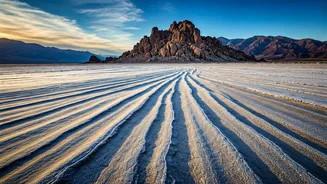
The phenomenon of sliding rocks in Death Valley has been a captivating puzzle for many years. These rocks, ranging in size, leave trails across the landscape,
suggesting movement without any apparent assistance. Scientists and observers have long pondered the mechanisms behind their motion. Various theories have been proposed, yet a definitive answer remained elusive for decades. The trails themselves provide evidence of the rocks' movements, offering clues about the forces at play. This puzzle fueled considerable curiosity and research, leading to a recent revelation that finally provides a satisfying explanation to the mystery. The solution demonstrates the power of natural forces working in a unique and challenging environment, such as Death Valley.
Unveiling the Secrets
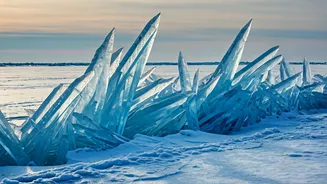
The research, a culmination of years of observation and scientific investigation, has identified a specific set of conditions crucial to the rocks' movement. It turns out that a unique combination of ice and wind is responsible. When the Death Valley environment experiences freezing temperatures, thin sheets of ice form on the surface of a shallow lake. As the ice melts and breaks, it embeds the rocks, effectively forming a raft. Then, light winds, acting upon these ice-embedded rocks, can generate enough force to push them across the slick surface of the lake bed. This delicate balance of freezing, melting, and wind creates the perfect conditions for these otherwise stationary objects to begin their slow journeys across the landscape, leaving a trail behind.
The Key Components
Several factors combine to create this remarkable phenomenon. The presence of shallow water is essential for ice formation. Freezing temperatures are required to create the thin sheets of ice that entrap the rocks. Gentle winds provide the impetus to move the ice and rocks across the muddy surface of the lake bed. The specific geology of Death Valley, with its flat and expansive surfaces, enables the rocks to travel freely and leave trails. The precise interaction between these elements, rarely seen elsewhere, explains the sliding rocks' movements. Without the convergence of all these conditions, the rocks would remain stationary, preserving the mystery. The combination underscores the complexity and dynamism of the natural world.
Impact on Science
The resolution of the sliding rocks' mystery has significant implications for scientific understanding. It highlights how seemingly simple natural processes can have complex effects. The findings can offer valuable insights into the dynamics of ice, wind, and geological formations. The research also serves as a reminder of the power of persistent scientific investigation and the importance of detailed observation. Scientists can now better understand the geological processes that shape landscapes, particularly those in extreme environments. Moreover, the study encourages further research on other similar phenomena observed in nature, spurring new avenues of exploration and discovery within geology and environmental science.
A Unique Environment
Death Valley's unique climate and geological conditions are essential for the sliding rocks to exist. The harsh desert environment, characterized by extreme temperatures and limited rainfall, might seem an unlikely setting for ice formation. However, when the conditions align, the result is truly amazing. The flat, dry lakebeds and shallow water play an essential role. This allows for ice to form and the rocks to move with minimal friction. This makes Death Valley a unique location for studying such phenomena. Without the specific combination of extreme temperatures, water availability, and wind patterns, the sliding rock phenomenon would not occur. The landscape itself is a crucial element in creating the conditions required to solve the puzzle.