
Solar Storm Watch
The National Oceanic and Atmospheric Administration (NOAA) has issued a G2-class geomagnetic storm watch, signaling an increased likelihood of auroras,
particularly at higher latitudes. These stunning displays of light occur when charged particles from the sun interact with the Earth's atmosphere. While this storm could produce breathtaking visuals, it also brings potential challenges for technologies that we rely on daily. The event highlights the constant interplay between space weather and our technological infrastructure.
What Is a G2?
Geomagnetic storms are categorized on a scale from G1 to G5, with G1 being minor and G5 being extreme. A G2 storm, as predicted by NOAA, indicates a moderate level of activity. Such storms arise from eruptions on the sun's surface, like solar flares or coronal mass ejections (CMEs). When these events send a stream of charged particles towards Earth, they interact with the Earth's magnetic field, causing disturbances. The G2 classification suggests that there will be noticeable, but generally manageable, impacts.
Auroras: The Show
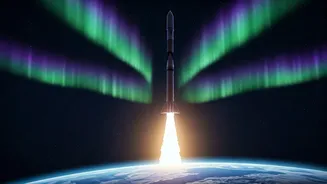
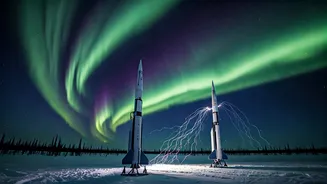
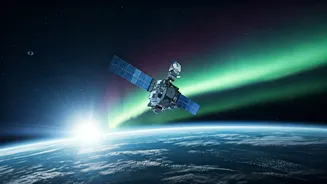
One of the most spectacular results of a geomagnetic storm is the aurora borealis and aurora australis, often called the Northern and Southern Lights. These light displays happen when solar particles collide with gases in the Earth's atmosphere. Oxygen emits green and red light, while nitrogen produces blue and purple hues. The intensity and visibility of the auroras depend on the strength of the storm. During a G2 storm, auroras are typically visible at higher latitudes, but sometimes can be seen further south than usual.
Tech Implications
While auroras are beautiful, geomagnetic storms can pose risks to technology. These storms can interfere with satellite operations, including communications and navigation systems. There is also a potential for issues with radio communications, and at the most severe levels, the storms can affect power grids. The G2 storm level implies a lower risk to infrastructure; however, operators of satellites and power grids will likely be monitoring conditions closely, to take any necessary action.
Staying Informed
For those interested in viewing the aurora, checking the latest space weather forecasts from NOAA and other sources is advisable. These forecasts give predictions of geomagnetic activity and when and where auroras might be visible. If you are reliant on satellite services or radio communications, staying updated on potential disruptions is useful. While a G2 storm typically brings manageable effects, remaining informed ensures you can prepare for the potential impacts and enjoy the spectacle of the lights, if they occur.