







AI's Moral Quandary
Artificial intelligence has achieved remarkable feats, from generating code to performing complex calculations, yet it fundamentally lacks an inherent
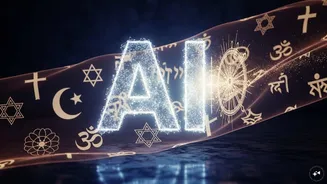
understanding of morality. This capability gap places the onus on AI developers, such as those at Anthropic and OpenAI, to meticulously train their models to comprehend and integrate ethical values. In response to this challenge, executives from these prominent AI companies have reportedly convened with religious leaders, including representatives from Hindu and Sikh faiths. This collaboration aims to ascertain how best to embed moral principles and values into the core architecture of AI systems, a critical step as the field progresses towards more sophisticated and autonomous capabilities, often discussed in the context of achieving Artificial General Intelligence (AGI).
The Faith-AI Covenant
A significant gathering, termed the inaugural 'Faith-AI Covenant' roundtable, recently took place in New York, bringing together key personnel from Anthropic and OpenAI with religious dignitaries. This initiative is particularly noteworthy given the historical tendency of Silicon Valley to maintain a distance from organized religion in its technological policy-making. However, the landscape appears to be shifting, with these AI pioneers actively seeking insights from religious communities to navigate the complex ethical terrain of AI development. The discussions are a direct response to escalating concerns regarding the ethical implications of AI as humanity moves closer to the theoretical frontier of AGI, where AI's cognitive abilities could mirror those of humans. The convening body behind this dialogue is the Geneva-based Interfaith Alliance for Safer Communities, an organization dedicated to addressing critical issues such as extremism, radicalization, and human trafficking, signalling a broader commitment to responsible technological advancement.
Diverse Interfaith Participation
The 'Faith-AI Covenant' roundtable was graced by the presence of leaders from a spectrum of religious traditions, underscoring the inclusive nature of the dialogue. Participants included representatives from the Hindu Temple Society of North America, the Baha’i International Community, The Sikh Coalition, the Greek Orthodox Archdiocese of America, and The Church of Jesus Christ of Latter-day Saints. This broad representation highlights a collective effort to gather diverse perspectives on the ethical development of AI. Furthermore, this meeting is not envisioned as an isolated event; plans are reportedly underway for similar discussions to be hosted in global cities such as Beijing, Nairobi, and Abu Dhabi, indicating a sustained commitment to fostering an international dialogue on AI ethics. The organizing entity, the Interfaith Alliance for Safer Communities, actively engages with a range of societal challenges, making this initiative a natural extension of their work.
Shaping AI's Moral Framework
The core objective of these discussions centers on how religious leaders can actively contribute to shaping the moral compass of AI models. This approach is seen as potentially more impactful than relying solely on regulatory measures to ensure ethical AI behavior. Baroness Joanna Shields, a participant with prior executive experience at Google and Facebook, emphasized the critical importance of this direct engagement, stating that the developers themselves are acutely aware of the power and capabilities of the technologies they are creating and generally aspire to develop them responsibly. The initiative aims to forge a set of guiding principles and norms, informed by the varied ethical and spiritual frameworks of different faiths, including Christianity, Sikhism, and Buddhism, which AI companies can then adopt. However, a notable challenge acknowledged is the inherent diversity of values across different religious groups, which could complicate the establishment of universally agreed-upon ethical standards for AI.
Current Ethical AI Efforts
The pursuit of embedding ethical considerations into AI is already evident within the tech industry. Companies like Anthropic and Google DeepMind have proactively recruited philosophers dedicated to the task of instilling values in AI systems. Anthropic, for instance, has previously engaged with Christian leaders to discuss the moral and spiritual orientation of its chatbot, Claude. The company's public 'Claude Constitution' explicitly states an aspiration for Claude to act as a 'deeply and skillfully ethical person would do in Claude’s position.' Anthropic has indicated that this constitution was developed with input from religious and ethics experts, showcasing a tangible step towards implementing ethically guided AI. This proactive approach reflects a growing recognition of the need for more than just technical proficiency; it demands a thoughtful integration of human values into artificial intelligence.
Religious Voices on AI
Even prior to the recent outreach from major AI developers, various religious organizations had begun articulating their own perspectives and guidance on AI. The Church of Jesus Christ of Latter-day Saints, in its handbook, has offered a nuanced endorsement of AI, acknowledging its potential as a valuable educational tool while asserting that it cannot substitute for divine inspiration. Similarly, in 2023, the Southern Baptist Convention passed a resolution advocating for proactive engagement with emerging technologies like AI, rather than merely reacting to their societal impacts after the fact. These examples demonstrate a growing awareness within religious communities of the profound implications of AI and a desire to actively influence its development and integration into society. While these dialogues represent a significant step, the extent to which they will translate into concrete actions and the precise form those actions will take remain subjects of ongoing observation.