
Solar Maximum Explained
The sun isn't always the same; its activity fluctuates in cycles, and one of these is the solar cycle. Solar cycles last approximately 11 years, during
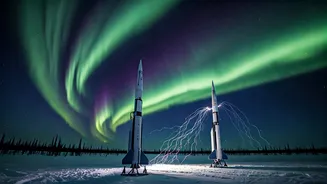
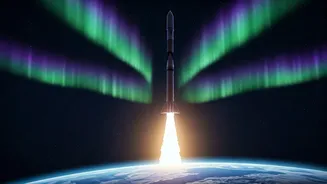
which the sun's activity, marked by the number of sunspots, varies. These sunspots are regions of intense magnetic activity. The solar maximum is the peak of the solar cycle, when the sun becomes the most active. During solar maximum, the sun emits more energy and experiences more frequent solar flares and coronal mass ejections (CMEs). CMEs release large amounts of plasma and magnetic fields into space. These ejections interact with Earth's magnetic field, leading to the aurora borealis, the Northern Lights, and its southern counterpart, the aurora australis, or Southern Lights.
The Aurora's Dance
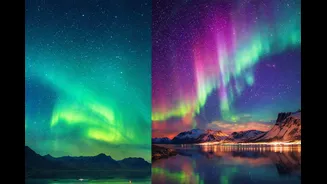
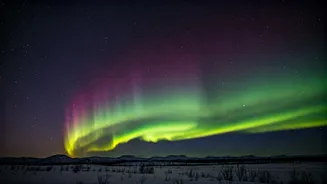
The Northern Lights, also known as aurora borealis, are nature's spectacular light show. They occur when charged particles from the sun, mainly electrons and protons, enter Earth's atmosphere. These particles are guided toward the Earth's poles by our planet's magnetic field. As these particles collide with atoms and molecules in the atmosphere, they transfer energy, exciting these atoms to higher energy levels. When the atoms return to their normal energy levels, they emit light, which produces the dancing curtains of green, red, and other colors that we see in the auroras. The colors depend on the type of gas the solar particles collide with and the altitude at which the collisions occur. Oxygen produces green and red light, while nitrogen emits blue and purple hues.
2026: A Prime Year
Forecasters anticipate that the solar maximum will occur around 2026. During this period, the increased frequency of solar flares and CMEs will significantly heighten the chances of observing auroras. This rise in solar activity translates to a greater influx of charged particles hitting Earth's atmosphere, resulting in brighter and more frequent auroras. As a result, sky watchers in areas with clear views of the northern horizon, particularly those at higher latitudes, will have more opportunities to see the dazzling displays. The enhanced activity means that the aurora might also be visible at lower latitudes than usual, presenting a chance for more people to witness this breathtaking spectacle.
Beyond Beauty: Challenges
While the solar maximum promises stunning auroras, it also poses some challenges. The increased solar activity can disrupt technological systems on Earth. Solar flares and CMEs can interfere with satellite communications, GPS signals, and power grids. Understanding and anticipating these events is crucial. Space weather forecasters monitor the sun's activity and issue alerts to mitigate potential impacts. It is critical for industries that rely on space-based technologies to plan and prepare for possible disruptions during the peak of the solar cycle. While preparing for potential impacts, the scientific community and amateur sky watchers alike anticipate the impressive visuals that will be on display.
Viewing the Aurora
To maximize your chances of seeing the Northern Lights, you should consider a few factors. First, go to a location with minimal light pollution and a clear view of the northern horizon. Dark skies are essential to see the faint light of the aurora. The best viewing locations include areas at high latitudes, such as Alaska, Canada, Iceland, Norway, and Sweden. Check the aurora forecast to get an idea of the likelihood and intensity of auroral activity. The Space Weather Prediction Center provides forecasts that can help you plan your viewing trips. Even if the forecast is positive, remember that the aurora is a natural phenomenon, and its appearance is never guaranteed. Patience and a willingness to stay outside in the cold are key to witnessing these breathtaking celestial displays.