
Betelgeuse's Mystery Unveiled
Betelgeuse, a giant red star located approximately 700 light-years away in the Orion constellation, has long fascinated astronomers. Its colossal size
and impending supernova have made it a subject of extensive research. The recent detection of a companion star’s wake by the Hubble Telescope confirms earlier speculations about the binary nature of Betelgeuse. This companion, obscured by the main star's brilliance, has proven difficult to directly observe. The wake provides evidence of its existence, showing how the smaller star interacts with its enormous partner. This new data is essential in helping scientists to learn more about the star’s environment and how it will eventually end its life in a spectacular supernova event.
Hubble's Observational Power
The Hubble Space Telescope, a collaboration between NASA and the European Space Agency (ESA), continues to be an invaluable asset in astronomical research. Its advanced instruments and orbital location, which allows for observations without atmospheric interference, provide unparalleled clarity. The Hubble telescope's unique ability to detect the wake of Betelgeuse’s hidden companion star highlights its importance in uncovering subtle celestial features. The wake, a trail of material and energy left behind as the companion orbits Betelgeuse, is key evidence. The use of advanced imaging techniques has helped reveal this interaction, giving scientists a much better understanding of star systems that exist in the universe. This recent work proves the telescope's vital role in astronomical research.
Implications for Research
The discovery has important implications for understanding the life cycle of stars and how they interact with their surroundings. The existence of a companion star can influence Betelgeuse's evolution, potentially impacting its supernova timeline. Scientists will use the data from the Hubble Telescope to build models and predictions. The findings support and improve the current theories surrounding the behavior of red supergiants. It also sheds light on the types of stars that can exist together and how their relationship can evolve over time. This research provides a richer context for interpreting the broader trends in astrophysics and improves how future space-based telescopes will be built.
Future Observations & Beyond
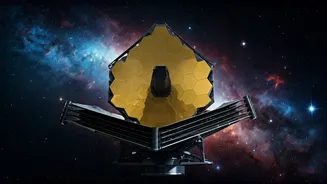
Astronomers are likely to use the data to develop and test a range of hypotheses regarding the Betelgeuse system. Future observations, potentially with the James Webb Space Telescope (JWST), could provide more detail. The JWST's capacity to see in infrared might help directly observe the companion star. This would enable scientists to learn more about its nature and the specifics of its orbit. The work that has already been done will help researchers look closer at the star system. These investigations will help provide more complete understanding of Betelgeuse and other red supergiant star systems. The discovery by the Hubble Space Telescope serves as a reminder of the universe's complexity and the continuing need for space-based observations.