






Beyond Surface Sensors
Losing an arm profoundly affects independence, especially in performing everyday tasks. While prosthetic limbs offer a solution, traditional ones often
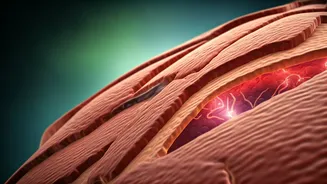
use surface electrodes with signal quality issues. Researchers have now demonstrated that implanted electrodes can provide significantly more accurate and dependable control over prosthetic hands and wrists. Current upper-limb prosthetics typically rely on skin-placed electrodes to capture muscle electrical activity, which then interprets various finger and wrist movements. However, these surface signals are prone to disruption from factors like inconsistent placement, changes in limb swelling, sweat, and movement artifacts, compromising real-world performance. Implanted electrodes, tiny devices surgically attached to muscles, offer a superior alternative. By targeting deeper muscles, they achieve a better signal-to-noise ratio and are less affected by daily variations. Furthermore, advanced techniques like regenerative peripheral nerve interface (RPNI) surgery can even help electrodes target muscles that are no longer present by grafting muscle tissue onto nerves in the residual limb. This not only provides a target for nerve endings, potentially reducing painful neuromas and phantom limb pain, but also allows for integrated placement of electrodes and wireless transmitters, potentially avoiding additional surgeries post-amputation.
Precision Under Test
A recent study rigorously compared the performance of implanted electrodes against traditional surface electrodes for prosthetic hand and wrist control. Two individuals with forearm amputations participated, each fitted with implanted electrodes in their residual limb's RPNIs and muscles. The research team meticulously recorded electromyography (EMG) signals from these implanted electrodes, as well as from both gelled and dry-domed surface electrodes. In a key experiment, participants controlled a virtual hand and wrist by mimicking various grips displayed on a screen. The recorded EMG signals were used to train classifiers to distinguish these grips, with separate classifiers developed for each electrode type. The efficacy of these classifiers was then assessed by having participants actively control the virtual hand's movements. The results were striking: participants achieved faster, more precise, and more reliable control with the implanted electrodes. With arms stationary, implanted electrodes yielded accuracy rates of 82.1% and 91.2% for the two subjects, significantly outperforming gelled surface electrodes (77.1% and 81.3%) and dry-domed electrodes (58.2% and 67.1%). Even when participants stood and moved their arms to simulate daily activities, the implanted electrodes maintained superior performance, with classification accuracy only slightly diminished, unlike the surface electrodes which became unstable.
Real-World Performance
To assess the practical application of this technology, one participant undertook the "Coffee Task," a simulation of real-world actions requiring precise grips and movements. This involved tasks like placing a cup in a coffee machine, inserting a pod, initiating brewing, moving the cup, and opening a sugar packet. The participant performed this complex sequence using a myoelectric prosthetic hand controlled by either implanted electrodes or dry surface electrodes, with and without wrist rotation capability. Crucially, the participant completed the task significantly faster with the implanted electrodes, succeeding in all three attempts within the allotted time. In contrast, control using surface electrodes led to the participant reaching the 150-second time limit in two out of three attempts. It's important to note that the Coffee Task was conducted using dry surface electrodes, as standard prosthetic sockets preclude the use of gelled electrodes. The study also investigated the benefits of simultaneous wrist and hand control, finding that enabling wrist rotation dramatically reduced compensatory body movements. Without wrist control, the participant had to extensively lean their upper body to complete the pouring task. With wrist rotation enabled, this lean was substantially minimized, highlighting the critical functional advantage wrist control offers for prosthesis users in daily activities. The advanced specificity and amplitude of signals from implanted electrodes enabled the integration of wrist movement without compromising the classification of multiple hand grasps, paving the way for more fluid and natural prosthetic limb operation.