







Self-Healing Materials
Imagine materials that can repair themselves – a concept often seen in science fiction but now a burgeoning reality. Researchers are working on self-healing
concrete, which could significantly extend the lifespan of infrastructure and reduce maintenance costs. These materials often contain microcapsules filled with a healing agent that is released when the material cracks. Similarly, research in the field of polymers has led to the development of self-healing plastics that can mend minor damages, improving durability and sustainability. This technology has implications for everything from construction to aerospace, promising more resilient and longer-lasting products. The development reflects a broader trend of biomimicry, where scientists are taking inspiration from nature's ability to heal and adapt to create more advanced materials.
Brain-Computer Interfaces
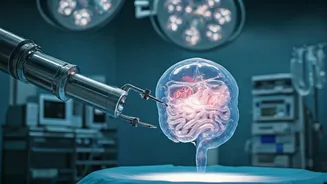
Brain-computer interfaces (BCIs), once the stuff of futuristic movies, are making strides in enhancing human capabilities. Scientists and engineers are developing devices that allow direct communication between the brain and external devices. These systems can enable individuals with paralysis to control prosthetic limbs or communicate through thoughts. BCIs work by interpreting brain signals and translating them into commands. The potential applications extend beyond medical fields, including enhanced cognitive abilities and advanced human-computer interaction. While still in its early stages, BCI technology holds enormous promise for people with disabilities and for developing new ways to interact with technology. Ethical considerations surrounding privacy and control are essential aspects of the progress in the BCI field.
Artificial Photosynthesis
Mimicking the process plants use to convert sunlight into energy, artificial photosynthesis is another area of rapid development. Scientists are creating artificial systems that can capture sunlight and convert it into fuels or other useful chemicals. These devices use materials that absorb sunlight and catalyze chemical reactions, similar to photosynthesis. This technology has the potential to produce clean, renewable energy, offering a sustainable alternative to fossil fuels. The efficiency and scalability of artificial photosynthesis are areas of ongoing research, which may contribute to a more sustainable energy future. Innovations in nanotechnology and materials science are essential to improve the efficiency and cost-effectiveness of these systems.
Lab-Grown Meat
The concept of lab-grown meat, also known as cultivated meat, is rapidly moving from the realm of science fiction to a feasible reality. This involves growing animal cells in a lab environment to produce meat without the need for traditional animal agriculture. This could help reduce the environmental impact of meat production and address ethical concerns related to animal welfare. Production processes require scientists to develop efficient ways of cultivating animal cells, designing bioreactors, and formulating the appropriate growth media. The industry aims to produce a variety of meat products using this method, thereby helping the development of sustainable food production. Regulatory hurdles and consumer acceptance are key to the growth of lab-grown meat.
Personalized Medicine
Personalized medicine, where medical treatments are tailored to an individual's genetic makeup and lifestyle, is becoming a reality. Advances in genomics and data analysis have enabled doctors to understand individual health profiles. This approach allows for more effective treatments by identifying the right medication and dosage based on an individual's unique needs. Diagnostic tools, like genetic sequencing, help predict disease risk and personalize preventive care. This personalized approach to healthcare is changing how medical professionals prevent and treat illnesses, making it possible to provide more effective treatments with fewer side effects. The growth in data and analysis has opened up new ways to personalize medical care and improve outcomes.
Space Elevators
While not yet fully realized, the idea of a space elevator, which could transport people and cargo into space, is being actively researched. A space elevator would be a structure extending from Earth's surface to geostationary orbit, allowing for easier access to space than traditional rockets. This involves the use of extremely strong and lightweight materials, like carbon nanotubes, to construct a cable capable of supporting the weight of the elevator cars and the tension created by Earth's rotation. The main challenges include material science and engineering, along with economic feasibility. While building a complete space elevator remains a complex endeavor, continued research could make this vision possible.
Exoskeletons
Exoskeletons, which were once imagined as enhancing the strength and endurance of soldiers, are now being developed for a variety of purposes. These wearable robotic devices can amplify human abilities, helping people with mobility issues regain the ability to walk. Exoskeletons use electric motors and sensors to provide support and augment the wearer's movements. They are now used in medical rehabilitation, industrial work, and military applications, with various designs to match specific needs. Advances in materials science and robotics are improving the efficiency, and portability of exoskeletons. Future developments could include sophisticated AI integration to enable adaptive and personalized movement assistance.
Directed Energy Weapons
The development of directed energy weapons, which use lasers or microwaves to disable or destroy targets, is another area where science fiction has become reality. These weapons are designed to deliver energy with pinpoint accuracy and incredible speed. Military research is focused on creating laser weapons for defense, and these weapons are becoming a crucial part of modern military capabilities. The technology has potential in missile defense systems, as well as in counter-drone and counter-missile systems. Developments in power sources and beam control systems are essential to improve the effectiveness and deployability of directed energy weapons. Ethical considerations and the potential for misuse remain important issues within this area of development.