





What are Solar Storms?
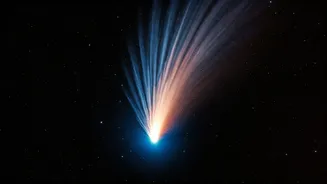
Solar storms are powerful bursts of energy from the Sun. These events can release massive amounts of radiation and charged particles. They are capable
of impacting technological systems on Earth and in space. These storms are a regular occurrence and understanding their nature is important for our preparedness.
Causes of Solar Storms
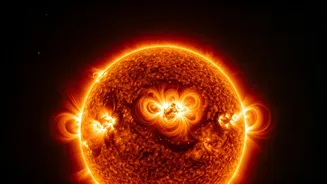
Solar storms originate from the Sun's activity, particularly from sunspots and the magnetic field. A key cause of solar storms is the sudden release of energy due to the entanglement of magnetic field lines near sunspots. These events can trigger phenomena such as solar flares and coronal mass ejections (CMEs). For instance, an X1.1 flare was detected on December 8, 2025. Another significant solar eruption was observed in late November, showing the consistent nature of this solar activity.
How Earth is Affected
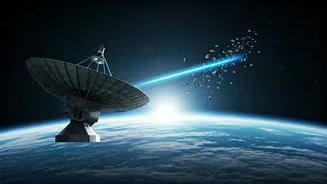
Solar storms can have far-reaching effects on Earth. These storms have the potential to disrupt communications and navigation systems. They can also damage satellites in orbit and overload power grids. The effects of solar storms can cause problems for technologies vital to modern society. NASA has noted that some solar storms can be intense enough to disrupt daily life. The strength of a solar storm, like an X1.1 flare, demonstrates the level of potential disruption.