





A Giant Leap for Comfort
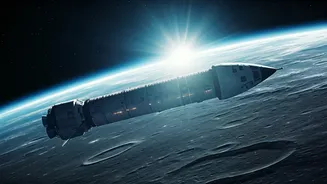
NASA's Artemis II mission marks a significant return to lunar exploration, but it's also quietly revolutionizing a fundamental aspect of long-duration
space travel: waste management. For decades, astronauts venturing beyond Earth's orbit relied on rudimentary systems that were, by NASA's own admission, uncomfortable and prone to embarrassing failures. The Apollo missions, for instance, utilized a collection of plastic bags and funnels, a method described as 'objectionable' and 'distasteful' in later assessments. This basic, yet vital, system often led to leaks and an overall lack of privacy, impacting crew satisfaction. The development of the new Universal Waste Management System (UWMS) for Artemis II represents a massive leap forward, addressing these historical challenges and significantly improving the quality of life for astronauts on extended missions. This isn't just a minor convenience; it's a critical step towards ensuring the well-being and operational efficiency of crews as they embark on more ambitious voyages to the Moon and potentially Mars.
Innovating Space Sanitation
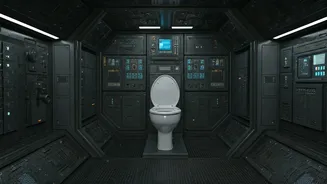
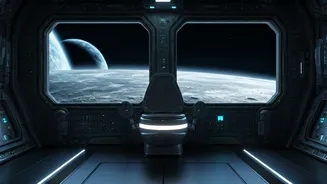
The Universal Waste Management System (UWMS) is the cutting-edge technology making its debut on Artemis II, designed to overcome the limitations of past space toilets. This advanced system offers an intuitive user experience in microgravity, incorporating helpful handles to ensure astronauts remain stable. A key feature is its ability to manage both urine and feces simultaneously, a significant improvement over previous designs. Furthermore, the UWMS has been engineered for universal use, accommodating both male and female astronauts with equal efficacy. Adding a touch of much-needed privacy within the confined space of the Orion capsule, the toilet includes a dedicated door, providing a sense of personal space. The development of this system has been a decade-long endeavor, with initial contracts awarded in 2015 and a precursor version successfully tested aboard the International Space Station in 2020 before its final integration in 2021. Artemis II will deploy a modified lunar variant, poised for its inaugural test on a crewed mission around the Moon.
Mission-Critical for Future
NASA places immense importance on waste management, classifying it as a mission-critical function, and for good reason: a failure in this system could jeopardize the entire expedition. The Artemis II mission serves as a pivotal testing ground, not only for human exploration of the Moon but also for the advanced technologies that will underpin future lunar campaigns and eventual Mars missions. The successful deployment and operation of the UWMS on Artemis II will provide invaluable data and validation for these future endeavors. This next-generation space toilet is more than just an upgrade in comfort; it is a testament to NASA's commitment to innovation and its strategic planning for sustained human presence in space, paving the way for longer, more complex, and ultimately more successful deep-space explorations.