
Makar Sankranti's Essence
Makar Sankranti, observed across India, marks the sun's transition into Capricorn. This astronomical event signifies the end of winter and the beginning
of longer days. It’s a time for gratitude for a bountiful harvest and new beginnings, celebrated with vibrant festivities. The festival's significance extends beyond agricultural practices, representing the triumph of light over darkness and the awakening of a new cycle. Across different regions, Makar Sankranti is celebrated with unique traditions, yet the common thread is the spirit of togetherness, joy, and the sharing of food.
Khichdi's Role in Rituals
Khichdi, a simple yet nourishing dish made from rice and lentils, holds a central place in Makar Sankranti celebrations. It symbolizes the simplicity and abundance of the harvest season. The ingredients, representing various grains and pulses, are cooked together, signifying unity and the blending of different elements. Preparing Khichdi is often considered an auspicious activity, and the act of sharing it with family and friends reinforces the bonds of community. The dish is believed to bring good fortune, health, and prosperity to those who consume it during this festive period. Its warmth and comfort align perfectly with the seasonal transition.
Moong Dal Khichdi Recipe
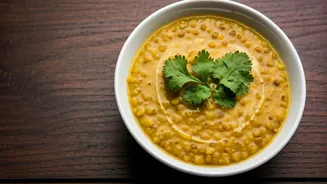
Making Moong Dal Khichdi at home is easy. Start with one cup of rice and half a cup of Moong Dal, washing them thoroughly. In a pressure cooker, add the rice, dal, and about four cups of water. Add a pinch of turmeric powder, salt to taste, and a teaspoon of ghee. Pressure cook for about 2-3 whistles or until the rice and dal are soft and well-cooked. For the tempering (tadka), heat ghee in a pan and add mustard seeds, cumin seeds, asafoetida, and curry leaves. Once they splutter, pour this over the Khichdi. Garnish with fresh coriander leaves, and serve hot with a dollop of ghee and perhaps some curd.
Ingredients' Significance
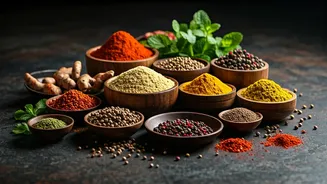
The ingredients used in Moong Dal Khichdi each have a unique role and significance. Rice provides carbohydrates, which are a primary source of energy. Moong Dal, a type of lentil, is rich in protein and fiber, making the dish highly nutritious. Turmeric powder adds color and has anti-inflammatory properties, while ghee enhances the flavor and contributes to the overall richness. The tempering ingredients, like mustard seeds and cumin seeds, add aroma and aid digestion. Coriander leaves provide freshness and vitamins. This careful selection of ingredients makes Khichdi a balanced meal, perfect for the season.
Serving Suggestions
Moong Dal Khichdi is often served with a variety of accompaniments. It pairs well with raita (yogurt with vegetables), which adds a cooling element. Papad (crispy lentil crackers) and pickles add a textural contrast and a burst of flavor. Ghee drizzled over the Khichdi enhances the taste and makes it more palatable. Some people also enjoy it with a side of chutney, such as tomato or mint chutney. The beauty of Khichdi lies in its versatility, as it can be adapted to individual preferences, making it a beloved dish across different regions and households during Makar Sankranti.