








DBS and Parkinson's
Parkinson's disease significantly impacts motor control, leading to slowness, stiffness, and tremors that disrupt daily life. Deep Brain Stimulation (DBS)
has emerged as a powerful therapeutic option, significantly alleviating these motor symptoms. However, the precise neural mechanisms through which DBS exerts its beneficial effects have remained somewhat elusive. Recent advancements in research, involving a collaborative effort between institutions in Cologne, Düsseldorf, Harvard Medical School, and Charité Berlin, have begun to illuminate these complex processes. By integrating electrophysiological recordings with sophisticated brain imaging techniques, scientists have pinpointed a highly specific network within the brain that appears to be directly linked to how well patients respond to DBS treatment. This breakthrough suggests that tailoring stimulation to this identified network could lead to more consistent and effective symptom relief for individuals living with Parkinson's.
Rhythm and Response
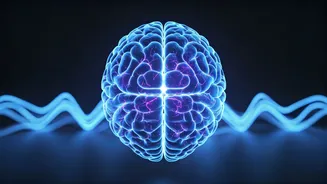
A significant revelation from this interdisciplinary research is the identification of a rapidly operating brain network that may dictate the efficacy of Deep Brain Stimulation (DBS) in managing Parkinson's symptoms. The study, published in the esteemed journal _Brain_, successfully bridges two previously separate research streams: one focusing on electrical brain activity and the other on mapping the optimal locations for stimulation. This novel integration provides a more comprehensive understanding of what DBS actually engages and offers an explanation for the variability in patient outcomes. The key finding is that this therapeutic network exhibits its strongest communication within a specific frequency band, known as the fast beta frequency range, which falls between 20 and 35 Hz. This synchronized activity within this particular rhythmic pattern appears to be fundamental to the positive impact of DBS on motor symptoms, suggesting a critical temporal component to successful treatment.
Bridging Space and Time
Professor Dr. Andreas Horn of the University of Cologne, a leading figure in computational neurology and the study's lead author, emphasized the unprecedented nature of their findings. "For the first time, we were able to characterize the DBS response network in Parkinson’s disease in terms of space and time, simultaneously," he stated. This means the researchers could pinpoint both the physical location and the precise timing of neural communication critical for DBS effectiveness. Their work demonstrates that optimal treatment of Parkinson's disease involves stimulating a meticulously defined network that operates in a synchronized manner within a specific frequency band. This synchronized activity offers a compelling explanation for why some patients experience greater improvement than others. The traditional approach to DBS often focused on either the spatial targeting of stimulation or the temporal characteristics of brain signals, but rarely both concurrently within the same analytical framework, making this simultaneous approach a significant step forward.
Combining Techniques
The research team meticulously analyzed data gathered from a substantial multi-center cohort, comprising data from one hundred brain hemispheres across fifty individual patients. Employing a sophisticated methodology, they simultaneously recorded brain signals using the implanted DBS electrodes and through magnetoencephalography (MEG). This dual-recording approach allowed them to meticulously map the functional connectivity, essentially how different brain regions communicate, between both deep and superficial areas of the brain. The study's analysis revealed a critical finding: the relevant network connecting the subthalamic nucleus with regions in the frontal cortex largely communicates at a relatively fast frequency, specifically within the 20-35 Hz range. Crucially, the strength of this particular neural connection was found to be a strong predictor of how much an individual patient's motor symptoms improved following electrode implantation, underscoring its importance in therapeutic outcomes.
Future Directions
Dr. Bahne Bahners, the study's first author from Düsseldorf University Hospital, elaborated on the implications of these findings. "These results suggest that a certain rhythm of the brain acts as a communication channel between the subthalamic nucleus and the cerebral cortex and may mediate the therapeutic effects of deep brain stimulation," he explained. This highlights the critical role of synchronized neural oscillations in facilitating the benefits of DBS. Looking ahead, the researchers are keen to refine DBS settings, particularly for patients who haven't achieved optimal results. "By stimulating regions that are connected to the identified network, we will probably be able to adjust DBS settings more precisely in the future, especially in patients who have not yet benefited optimally from deep brain stimulation," Dr. Bahners added. The team plans further investigations into the direct causal impact of DBS on these identified brain networks, with relevant studies currently underway to deepen our understanding.