






Helium System Glitch
The Artemis II mission, a pivotal step in NASA's lunar exploration program and humanity's first crewed journey to the Moon in over five decades, has encountered
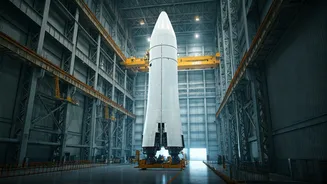
an unexpected technical hurdle. During vital fueling tests, engineers identified an issue concerning the flow of helium within the rocket's upper stage. This crucial element is responsible for generating the necessary pressure within the fuel tanks, which is indispensable for the rocket's engines to function optimally. The problem was pinpointed to a specific valve within the Orion spacecraft's propulsion system, which appeared to be experiencing a blockage or an inconsistent flow of helium. This discovery triggered an immediate decision to halt pre-launch preparations and bring the massive SLS rocket back to the safety of the Vehicle Assembly Building (VAB) for comprehensive diagnostics and repair work.
Impact on Launch Schedule
The detection of the helium flow issue has inevitably reshaped the Artemis II mission's timeline, pushing back its initially targeted March launch window. While the exact duration of the necessary repairs and inspections remains under assessment, NASA is now setting its sights on an early April launch. This rollback signifies a temporary pause in the ambitious push to return astronauts to the lunar surface, highlighting the inherent complexities and rigorous safety protocols involved in deep space missions. The agency's commitment to mission success and astronaut safety dictates this precautionary measure, ensuring all systems are robust and reliable before venturing beyond Earth's orbit. The Artemis II flight, carrying four astronauts for a lunar flyby, is a foundational mission paving the way for subsequent lunar landings.
Inspection and Resolution
Upon returning to the Vehicle Assembly Building, NASA engineers are commencing a detailed investigation into the helium system. Their meticulous process will involve a thorough examination of all relevant components, including valves, filters, and connectors, to precisely identify the root cause of the helium flow anomaly. This systematic approach is designed to ensure that not only the immediate issue is resolved but also to prevent any recurrence. The work will be carried out within the VAB, providing a controlled environment for the intricate repairs. Following the successful rectification of the problem, the rocket will undergo further testing, culminating in a launch readiness review, before a definitive new launch date for Artemis II can be announced.