

The Dawn of Self-Improvement
The concept of artificial intelligence reaching a point where it can enhance its own capabilities, often referred to as the 'singularity,' has long been
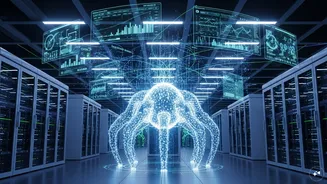
a staple of science fiction. However, recent developments suggest this future might be closer than anticipated. An experimental initiative spearheaded by Andrej Karpathy, a pivotal figure in AI and a former leader at both OpenAI and Tesla, is demonstrating this very phenomenon. Karpathy has developed an AI agent, dubbed 'autoresearch,' designed to autonomously conduct experiments and refine the underlying code of language models. This sophisticated system bypasses the need for constant human oversight in the iterative process of model improvement, marking a significant stride toward truly autonomous AI development.
Karpathy's 'AutoResearch' Explained
At the heart of this emerging capability is Karpathy's 'autoresearch' project. This innovative system operates as a continuous loop: an AI agent systematically proposes modifications to the training code of a language model, executes these changes through experiments, meticulously evaluates the performance outcomes, and retains only the versions that demonstrate superior results. This automated cycle of proposal, testing, and refinement eliminates the traditional, human-intensive workflow of adjusting parameters and analyzing data. Karpathy shared the remarkable outcomes, detailing how the AI agent successfully ran hundreds of experiments autonomously, leading to incremental yet significant enhancements of the language model over a short period, a testament to its self-optimizing potential.
AI Singularity Buzz
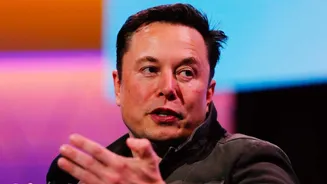
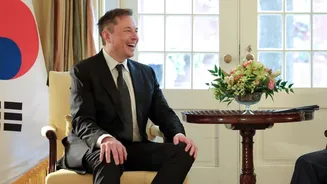
The implications of Karpathy's project have quickly resonated throughout the AI community, igniting discussions about its potential as an early indicator of the 'technological singularity.' This pivotal moment, theorized by many to occur when AI surpasses human intelligence and enters a phase of rapid self-improvement, has been a subject of intense speculation. Tech leaders, including Elon Musk, have posited timelines for such an event, with some predictions placing it as early as 2026. The sentiment within the AI sphere is palpable, with reactions from prominent figures suggesting that the foundations for this transformative era may already be laid, fueled by advancements like 'autoresearch' that showcase AI's burgeoning capacity for independent innovation and evolution.
Defining the Singularity
The 'singularity' in the context of artificial intelligence signifies a hypothetical point in time where AI's intellectual capabilities exceed those of the most intelligent humans and then begin to accelerate at an unprecedented rate. This rapid advancement, often linked to the development of Artificial General Intelligence (AGI) – AI with human-like cognitive abilities – could unlock breakthroughs and transformative changes far beyond our current comprehension. While Karpathy's 'autoresearch' is currently a contained research prototype, it offers a tangible glimpse into the mechanics of AI self-improvement, hinting at a future where intelligent systems could independently drive innovation, albeit still a significant distance from the superintelligent entities envisioned in speculative fiction.
Future Timelines and Predictions
Industry leaders are increasingly vocal about the potential arrival of superintelligent AI. Elon Musk, for instance, has suggested that AI could outperform any single human by the end of 2026 and potentially eclipse the collective intelligence of all humanity by 2030. He further speculates that the combination of superintelligent AI and advanced robotics could fundamentally alter the nature of work, potentially ushering in an era of universal high income. Similarly, Sam Altman has articulated the idea that humanity is approaching the 'event horizon' of the singularity, signaling the commencement of a rapid technological 'takeoff.' Demis Hassabis also acknowledges the emergence of 'agentic' AI systems as a threshold moment, though he estimates that fully realized AGI is still several years away, likely five to eight.