Galaxy Collisions Decoded
Scientists have found that when galaxies collide, it can lead to the activation of supermassive black holes (SMBHs) residing at the center of the galaxies.
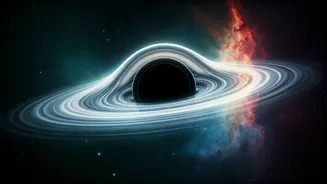
The process of galaxies crashing into each other stirs up the gas and dust that surround the central black hole. This causes the material to fall into the black hole. As matter falls into the black hole, it heats up, forming an accretion disk, and emits enormous amounts of energy. This emitted energy is often observed as jets of particles or high-energy radiation, essentially making the black hole 'active'. Through the use of advanced telescopes, astronomers are now able to see these processes and establish a direct link between galaxy collisions and the activities of these SMBHs. The Euclid data supports this relationship, offering deeper insights into galactic evolution. The insights are changing how astronomers view the lifecycle of galaxies and their components.
Euclid Telescope's Role
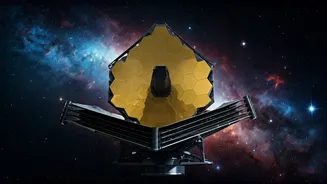
The Euclid telescope has played a critical role in gathering the data used to confirm the connection between galaxy collisions and the activation of supermassive black holes. Designed to map billions of galaxies and study the expansion of the universe, Euclid's unique capabilities make it a perfect tool for observing these events. The telescope’s ability to observe vast areas of the sky with high precision allows it to identify galaxy collisions. This data is then analyzed in relation to the behavior of SMBHs. The collected data is then processed to understand the link between collisions and the activity of SMBHs. The Euclid’s mission has yielded many observations, highlighting the critical role these collisions play in the evolution of galaxies and the activity of the SMBHs at their cores. This data has enabled scientists to analyze the dynamics of galaxy interactions with an unprecedented level of detail.
Black Hole Activation Explained
When galaxies merge, the supermassive black holes at their centers often engage in a dramatic dance of their own. As the galaxies interact, gravitational forces cause their central black holes to move closer together, eventually merging. During the process, the black holes are fed by the gas and dust within the merging galaxies. This causes the material around the black holes to become superheated, forming accretion disks and emitting high-energy radiation. This phase is key to making the black holes active. The energy released can also be observed as bright quasars or as powerful jets. This activity has an incredible influence on the surrounding environment. The study of this activity helps scientists understand how galaxies form, grow, and evolve through cosmic time. The observations reveal intricate details of how black holes become active, providing evidence for the role of galaxy mergers in driving these processes.
Implications for Galaxy Evolution
Understanding the activation of supermassive black holes through galaxy collisions is vital for fully grasping the evolution of galaxies. It is now known that the growth of a galaxy is greatly affected by the central black hole's activity. When a black hole is active, the energy it emits can affect the galaxy in several ways. The intense radiation from the black hole can heat the gas in the galaxy, which may stop it from forming new stars. This process, known as feedback, can regulate the growth of the galaxy and determine its shape and size. Further, the study of galaxy collisions and their associated black hole activity helps astronomers to better understand the role of these SMBHs in shaping the universe. Data from missions like Euclid is helping to refine models of galaxy evolution, providing a more detailed picture of how these cosmic structures have changed over billions of years. These revelations enable a greater comprehension of our cosmos.
Future Research Directions
The findings on galaxy collisions and SMBH activation provide a good base for future research. Scientists are eager to study the long-term effects of these collisions and the processes that control the merging of black holes. The use of more advanced telescopes and techniques to observe these events from different angles will be a key part of future research. This includes gathering more data on the interactions between galaxies and their black holes. The study will continue to unveil the effects of energy released by the SMBHs on their host galaxies, further refining our understanding of galactic evolution. Such future investigations will also attempt to uncover the underlying details of the physical processes. In the future, advanced simulations, using supercomputers, will model these interactions to gain a more thorough comprehension of the universe.