






Pioneering Reusability
Blue Origin, the ambitious space exploration company established by Jeff Bezos, is on the cusp of a groundbreaking achievement this Sunday with the planned
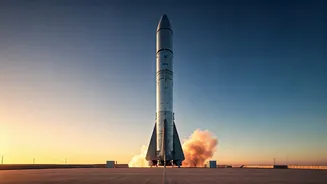
launch of its heavy-lift New Glenn rocket. This mission carries the distinction of being the first time the company will utilize a previously flown rocket booster. The launch window is set between 6:45 am and 8:45 am local time from Cape Canaveral, with the payload being a communications satellite destined for AST SpaceMobile. The impressive New Glenn rocket, standing at nearly 100 meters tall, has completed two flights previously, but each utilized brand-new boosters. This impending flight marks a critical transition towards operational reusability for the company, a strategy long championed for its potential to drastically reduce the cost of space access and increase launch frequency.
Cost Reduction and Competition
This pioneering reuse attempt is a cornerstone of Blue Origin's strategy to significantly decrease the financial burden of space launches and enhance the pace of its operations. By embracing reusable rocket technology, the company is directly challenging the established dominance of Elon Musk's SpaceX, which has been a frontrunner in mastering this complex engineering domain. The booster slated for this Sunday's mission was successfully retrieved after a flight in November, demonstrating a controlled vertical landing onto a platform in the Atlantic Ocean—a testament to advanced engineering capabilities. Following its recovery, the booster underwent a comprehensive refurbishment process, which included replacing all its engines and implementing further modifications to ensure its readiness for a subsequent mission, underscoring the rigorous development cycle involved in achieving reliable reusability.
A Transformative Mission
Following a successful liftoff, the New Glenn rocket will undergo a critical separation of its two main stages. The upper stage will proceed to carry the AST SpaceMobile satellite on its trajectory into orbit, while the primary booster will initiate its return sequence to Earth, aiming for another controlled landing at sea. This mission is being observed with great anticipation, as the New Glenn rocket is central to Blue Origin's overarching strategic objectives, particularly its integral role in NASA's Artemis program. This ambitious NASA initiative aims to re-establish a human presence on the Moon, with a target of returning astronauts by 2028. Blue Origin is actively engaged in direct competition with SpaceX in the development of lunar landers for the Artemis program, a key component of the broader United States effort to regain a lunar foothold amidst escalating global competition.