






The Microplastic Menace
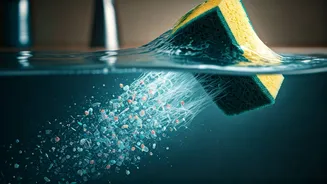
Kitchen sponges, ubiquitous in our homes, are a hidden source of microplastic pollution. With every scrub, these porous tools release tiny plastic fragments
that make their way into our wastewater systems and ultimately into the environment. These minuscule particles have become a pervasive issue, found in our oceans, soil, air, and even the food and water we consume. Scientists are increasingly concerned about their potential effects on both wildlife and human health, as they can be ingested and may carry harmful chemicals or trigger inflammation. Understanding the everyday sources of these microplastics, like our dishwashing sponges, is crucial in addressing this growing environmental challenge.
Measuring Plastic Loss
A dedicated team of researchers from the University of Bonn embarked on an investigation to quantify the microplastic contributions of kitchen sponges. They employed a dual approach, combining real-world household usage with controlled laboratory experiments. In the real-world phase, households across Germany and North America were tasked with using specific sponge types during their regular dishwashing. By meticulously weighing the sponges before and after use, the scientists could estimate the material lost. To supplement this, a specially designed apparatus known as the 'SpongeBot' was developed to mimic the physical stresses of scrubbing in a laboratory setting. This combined methodology yielded more robust and reliable data on how much microplastic is released from sponges under various conditions, providing a comprehensive understanding of their shedding behavior.
Sponges vs. Water
The findings from the study present a nuanced perspective on the environmental impact of dishwashing. While it was confirmed that all tested sponges degrade over time, releasing microplastics, the quantity varied based on the sponge's material composition, with those containing less plastic generating fewer particles. Annual microplastic emissions per person ranged from approximately 0.68 to 4.21 grams. However, when a broader environmental assessment was conducted, a striking conclusion emerged: the amount of water used during dishwashing accounts for a significantly larger portion of the ecological footprint. Between 85% and 97% of the total environmental burden is attributed to water consumption, dwarfing the contribution from microplastics, which represent a much smaller share of the ecosystem damage.
Reducing Your Impact
The research offers practical guidance for individuals looking to minimize their environmental footprint when washing dishes. The most impactful action highlighted is the conscious effort to reduce water usage, as this single factor has the greatest positive effect on the environment. Additionally, consumers are encouraged to select sponges that are made with lower plastic content, a choice that directly correlates with a reduction in microplastic shedding. Extending the lifespan of your sponge is also recommended; by using a sponge for a longer duration, you decrease the overall consumption of resources and the frequency of replacement, further contributing to a more sustainable dishwashing routine.