





A Leap in Orbital Computing
Living and working in space demands robust technology, and even the most advanced environments encounter the challenges of aging hardware. Recognizing
this, space agencies are ensuring their crews have access to cutting-edge tools. The Expedition 74 crew recently received updates on a comprehensive computer refresh planned for the International Space Station. This initiative began with an overhaul of the network servers, paving the way for the integration of new, significantly more potent laptop computers. This strategic upgrade is designed to streamline daily tasks and support the complex scientific endeavors conducted aboard the station, ensuring that astronauts are equipped with the best available technology for their demanding mission profiles. The introduction of these advanced machines marks a critical step in maintaining the operational excellence and scientific output of the ISS.
The New Space Laptops
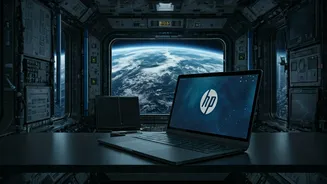
While the initial announcement from the space agency was somewhat vague regarding the specific model, subsequent confirmation revealed that the forthcoming standard for onboard computing will be the HP ZBook G9 Mobile Workstation. This cutting-edge device is set to replace the previous generation, the HP ZBook Fury G2 laptops, which have been integral to operations. The process of equipping the ISS with these upgraded systems commenced with the launch of the first batch of the newer machines in October 2025. This transition signifies more than a simple hardware replacement; it represents a strategic investment in enhancing the station's capabilities. The ISS, while always relying on dependable, mission-tested equipment, increasingly supports complex scientific investigations, detailed imaging analysis, vital communication links, intricate logistics management, and crucial system monitoring. All these functions will undoubtedly benefit from the increased processing power and advanced features of these new workstations, elevating the overall efficiency and effectiveness of the space station's operations.
Unpacking the Powerhouse Specs
The new laptops destined for orbit are far from ordinary; they are powerful, workstation-grade systems engineered to handle intensive tasks. Each custom configuration for the ISS is equipped with an Intel Core Ultra 9 vPro HX processor, a top-tier component designed for high performance and reliability. Complementing the processor is an Nvidia RTX Pro Blackwell GPU, enabling advanced graphics processing and computational capabilities crucial for imaging and simulations. To ensure seamless multitasking and data handling, these machines boast an impressive 128GB of DDR5 memory. Furthermore, they feature four 2TB NVMe SSDs, providing ample and rapid storage for vast datasets. While these specifications rival those of high-end desktop workstations rather than typical consumer laptops, an essential modification has been made for space deployment. HP has developed a unique NASA-exclusive AC/DC power adapter. This is because the ISS primarily operates on DC power, and standard AC chargers used on Earth would be incompatible and ineffective in the orbital environment. This specialized adapter ensures consistent and safe power delivery to these advanced computing systems.
A Foundation for Future Missions
The integration of these advanced HP mobile workstations marks a significant milestone in the ongoing technological evolution of the International Space Station. Already, over 100 HP workstations are actively contributing to various mission-critical functions on the ISS, alongside specialized printers designed for microgravity environments. The ZBook G9 machines represent the third distinct generation of HP computing platforms to be deployed in orbit, underscoring a long-standing and successful partnership. With the station's planned decommissioning in 2030, this substantial computer refresh is poised to be one of the final major hardware updates, if not the very last, before the facility is eventually deorbited. This forward-looking upgrade ensures that the ISS remains a cutting-edge platform for scientific research and space exploration right up to its final operational days, providing astronauts with the technological means to continue their vital work.