
Comet ATLAS Arrival
The interstellar Comet 3I/ATLAS has been making a noteworthy approach to our planet, creating a remarkable astronomical event. This comet, which originates
from interstellar space, offered a unique opportunity for scientists to observe its behavior. The event was particularly significant because it allowed for detailed study of a cosmic visitor relatively close to Earth. This flyby offered a chance to gain insights into the composition, structure, and dynamics of comets, helping to expand our understanding of the solar system and beyond. The comet's appearance provided a rare spectacle for observers and a valuable data source for research.
Wobbling Jets Observed
Observations of Comet 3I/ATLAS revealed unusual behavior, specifically the presence of wobbling jets. These jets, streams of gas and dust ejected from the comet's nucleus, exhibited a distinctive, unsteady motion, which was noted in the earliest studies. This wobbling activity was intriguing as it differed from the more predictable jet behavior seen in some other comets. It added complexity to the scientific interpretation of the comet's structure and activity. The observed phenomenon provided important evidence of the internal forces at play within the comet, influenced by solar radiation and the comet's composition. Studying these jets offered crucial data to understand the processes occurring as the comet approached the Sun.
Evolving Tail Displayed
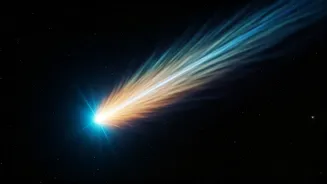
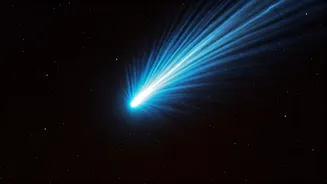
An evolving tail was another key feature observed during the Comet 3I/ATLAS approach. The comet's tail, which is made up of dust and gas, changed in shape and orientation as the comet traveled near the Sun. These changes happened in response to the solar wind and radiation pressure. Detailed observations showed how these external factors shaped the tail, providing important clues about the composition of the cometary material. The evolving tail served as a dynamic indicator, visually reflecting the comet's environment and the impacts of the sun on the comet. Scientists used data about tail evolution to analyze the comet's behavior and the relationship between solar influences and comet structure.
Sun-Facing Anti-Tail
Astronomers detected the rare presence of a sun-facing anti-tail in Comet 3I/ATLAS. This phenomenon occurs when dust particles from the comet are scattered in a way that seems to point directly toward the sun, giving the illusion of a tail extending in the opposite direction. It is a striking visual feature, and it is not typically seen in comets. The sun-facing anti-tail is formed by larger dust particles that move more slowly, affected by the comet's motion and the sun's radiation pressure. Detecting this anti-tail provided an opportunity to study the behavior of dust and its interactions with solar radiation. The presence of the anti-tail further enhanced the unique nature of this interstellar visitor.
Earth Flyby Details
The closest approach of Comet 3I/ATLAS to Earth provided a special opportunity for observations. This event provided scientists with a rare chance to study an interstellar object from a relatively close distance. This allowed for detailed imaging and spectroscopic analysis. This flyby provided a chance to gather data about the comet’s composition, its size, and the way it interacted with the solar wind. The timing of the Earth flyby was particularly significant, as it allowed observations from multiple vantage points. These observations are critical in providing comprehensive data to refine theories about how comets function and contribute to the understanding of the solar system's origins.